The first time I really noticed the word “lust”, it wasn’t in a dictionary. It popped up in a late-night group chat after someone posted a celebrity photo and the comments went wild.
One person joked, “ok but this is pure lust,” and suddenly everyone seemed to understand—except me. I knew it had something to do with attraction, but it felt stronger than just liking someone. Since then, I’ve seen lust everywhere: in texts, memes, song lyrics, TikTok captions, and even serious posts about relationships.
If you’ve ever paused and wondered what it truly means—and how people use it online—this guide breaks it down in the simplest way possible.
Quick Answer
Lust means a very strong feeling of physical desire or attraction toward someone or something.
What Does Lust Mean in Text?
Full Form and Plain-English Meaning
Lust is not an abbreviation or texting shortcut. It’s a full word with a long history, but its meaning in modern texting and online chat is pretty simple.
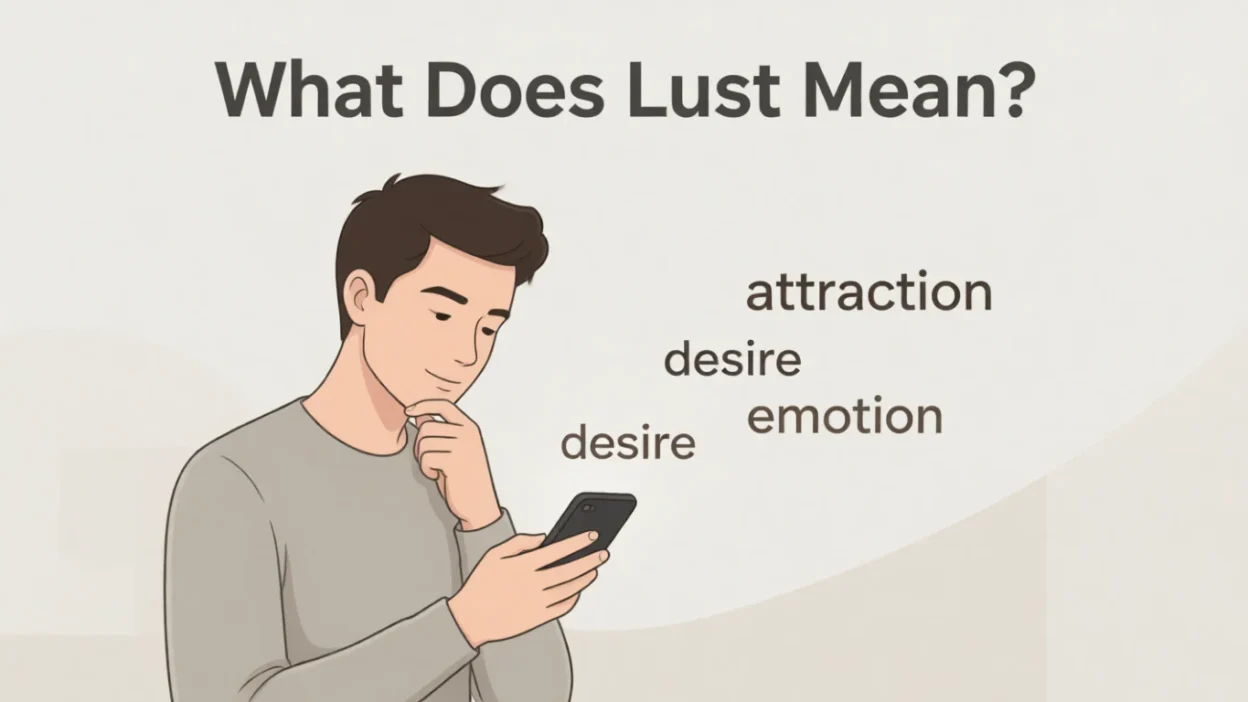
In plain English, lust means wanting someone mainly for physical reasons. It’s about desire, not emotions, love, or commitment. When people say “it’s lust,” they usually mean the feeling is intense, fast, and based on attraction rather than deep connection.
Why People Use the Word Lust
People use lust because it clearly separates physical desire from emotional love. In texting culture, it helps explain feelings quickly without long explanations.
Example Sentence
“i thought it was love, but honestly it was just lust.”
Bold summary: Lust is a strong physical desire or attraction, not the same as love or emotional connection.
Where Is the Term Lust Commonly Used?
You’ll see lust used in both casual and serious conversations online.
Common Places You’ll See It
- Text messages and private chats
- Social media captions and comments
- Relationship discussions
- Memes and jokes
- Online forums and advice threads
Tone of the Word
The tone of lust is usually neutral to serious, depending on context. It can be casual in jokes but more formal or deep in discussions about relationships, emotions, or values.
It’s not slang-only, but it does fit naturally into modern online chat.
Realistic Conversation Examples (Texting Style)
Here’s how lust shows up in everyday, real-feeling chats:
- “i was attracted to him, but it was just lust”
- “this isn’t love, it’s straight-up lust”
- “social media really fuels lust sometimes”
- “that phase was pure lust, nothing more”
- “i confuse lust with love way too often”
- “lust fades, connection doesn’t”
- “he thinks it’s love but i feel it’s lust”
- “that song describes lust perfectly”
Notice how the word often appears in thoughtful or reflective messages.
When to Use and When Not to Use Lust
✅ When to Use Lust
- Talking honestly about attraction
- Explaining relationship feelings
- Discussing emotions or self-growth
- Writing thoughtful posts or comments
- Having mature conversations
❌ When Not to Use Lust
- With people uncomfortable with the topic
- In professional or work settings
- In jokes that may offend
- Around younger audiences
- In sensitive situations
Comparison Table
| Context | Example Phrase | Why It Works / Doesn’t |
|---|---|---|
| close friends | “it was lust, not love” | honest and clear |
| relationship talk | “lust fades over time” | thoughtful |
| work chat | “this project is lust” | confusing |
| casual joke | “pure lust lol” | okay with right audience |
Similar Words and Alternatives to Lust
If lust feels too strong, people often use softer or clearer alternatives.
| Word | Meaning | When to Use |
|---|---|---|
| attraction | interest or pull | neutral, safe |
| crush | light romantic interest | casual chats |
| desire | strong wanting | serious tone |
| infatuation | short-term obsession | reflective talks |
| chemistry | mutual attraction | relationships |
Each word changes the tone slightly. Lust is the strongest and most physical of them all.
Frequently Asked Questions (FAQ)
1. Is lust always a bad thing?
No. Lust is a natural human feeling. It only becomes an issue if it’s confused with love or used in unhealthy ways.
2. Is lust the same as love?
No. Lust is about physical desire, while love includes trust, care, and emotional connection.
3. Can lust turn into love?
Yes, sometimes. Lust can be the starting point, but love grows deeper over time.
4. Is lust a slang word?
No. Lust is a real English word, but it’s commonly used in modern texting and social media.
5. Is it okay to say lust in text messages?
Yes, if the conversation and audience are appropriate.
6. Do people use lust jokingly online?
Sometimes, especially in memes or casual comments.
7. Can lust apply to things, not people?
Yes. People may say they “lust after success” or money, meaning strong desire.
Final Thought
So, what does lust mean? It’s a powerful word that describes strong physical desire, often without emotional depth. In today’s digital communication, lust helps people express feelings honestly—whether they’re joking in a chat, reflecting on a relationship, or explaining emotions clearly.
Understanding the meaning helps avoid confusion, especially when navigating love, attraction, and modern texting culture. Used thoughtfully, it’s a useful word that brings clarity to complex feelings.

Bret Lee writes educational and research-based content for Whygenix.com, focused on clarity, accuracy, and explaining why concepts matter through simple, engaging, reader-friendly writing.