It often starts with a short message or comment.
A friend texts, “my doctor said medicare part b covers this,” or you see someone ask in a Facebook group, “does part b pay for this test?”
Suddenly, you realize you’ve heard the term many times—but you’re not totally sure what it actually means.
Medicare can feel confusing, especially when different “parts” get mentioned in chats, online forums, or family conversations. Part A, Part B, Part C—it’s a lot.
If you’ve ever paused and wondered, “what does medicare part b cover?”, you’re not alone. This guide breaks it down in clear, simple language so you can understand what it includes and why it matters.
Quick Answer
Medicare Part B covers doctor visits, outpatient care, preventive services, medical tests, and certain medical equipment.
What Does Medicare Part B Cover?
Full Form and Meaning
Medicare Part B is part of Original Medicare, a U.S. government health insurance program mainly for people aged 65 and older, and for some younger people with disabilities.
Plain-English Explanation
Medicare Part B helps pay for medical care you receive outside of a hospital stay. Think of it as coverage for everyday healthcare needs—like seeing a doctor, getting tests, or receiving preventive care.
While Part A focuses on hospital stays, Part B focuses on medical services and doctor care.
Why People Use Medicare Part B
People rely on Part B because it:
- helps pay for regular doctor visits
- covers important screenings
- supports long-term health care needs
- reduces out-of-pocket medical costs
Short Example Sentence
Bold summary: Medicare Part B covers doctor services, outpatient care, preventive care, tests, and medical equipment.
What Services Does Medicare Part B Cover?
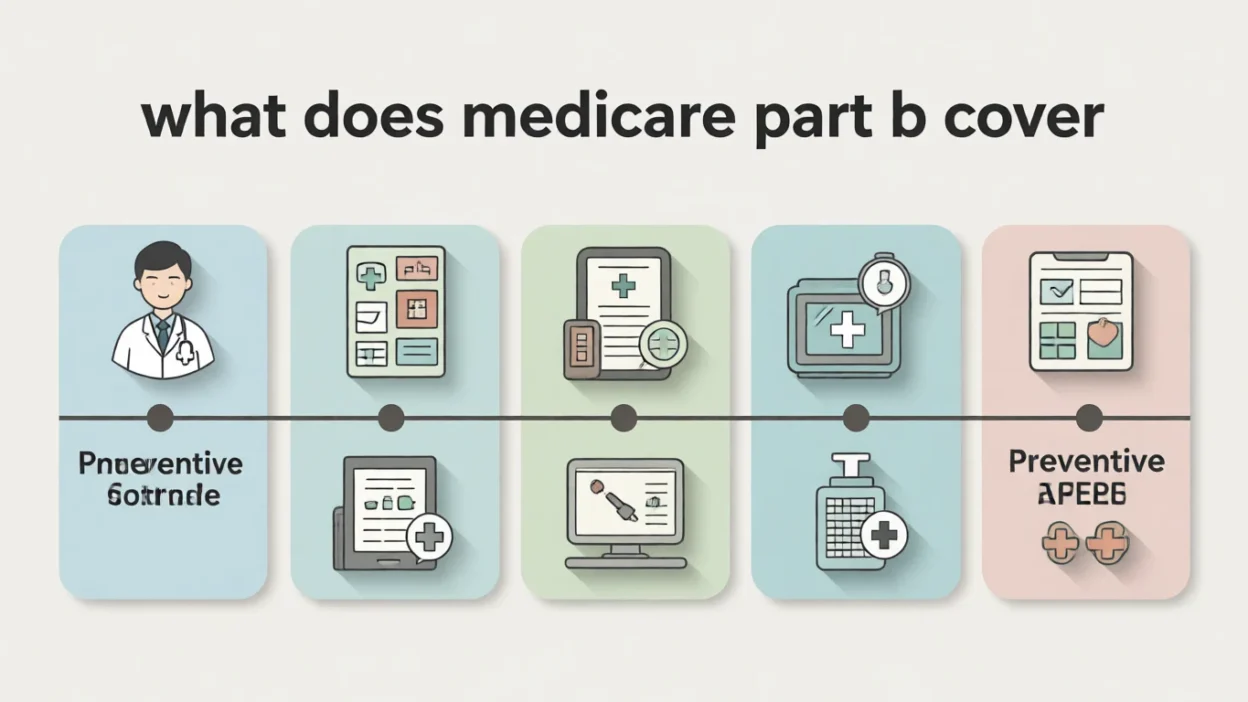
Here’s a clear look at what Medicare Part B usually includes:
Doctor and Medical Services
- visits to doctors and specialists
- outpatient hospital care
- second medical opinions
Preventive Services
- annual wellness visits
- vaccines (like flu shots)
- cancer screenings
- heart disease and diabetes screenings
Medical Tests and Lab Work
- blood tests
- x-rays
- MRIs and CT scans
- diagnostic screenings
Mental Health Care
- outpatient mental health services
- counseling and therapy
- substance use treatment (outpatient)
Medical Equipment (DME)
- wheelchairs
- walkers
- oxygen equipment
- hospital beds (when prescribed)
Other Covered Services
- ambulance services (when medically necessary)
- limited chiropractic care
- some outpatient physical therapy
Where Is “Medicare Part B” Commonly Used?
Unlike internet slang, this term is mostly used in health and insurance conversations, but it still shows up online.
Common Places You’ll See It
- text messages between family members
- facebook groups and online forums
- comments on healthcare posts
- DMs asking for advice
- insurance websites and blogs
Tone of the Term
- neutral
- informational
- formal to semi-formal
It’s not casual slang, but it’s often discussed in everyday conversations.
Realistic Conversation Examples (7–10)
Here’s how “medicare part b” shows up in real chats:
- “does medicare part b cover blood tests?”
- “my doctor said part b should pay for that”
- “i think medicare part b covers physical therapy”
- “check if part b includes that screening”
- “mom just enrolled in medicare part b”
- “part b helped with most of the outpatient costs”
- “is mental health care covered under part b?”
- “medicare part b paid for the x-ray”
- “you still pay a small amount with part b”
When to Use and When Not to Use the Term
✅ Do Use “Medicare Part B” When
- talking about insurance coverage
- asking about medical services
- posting in health-related forums
- discussing doctor visits or tests
- helping family members understand Medicare
❌ Don’t Use It When
- chatting casually with no health context
- joking or using slang
- talking about private insurance plans
- discussing hospital-only coverage (that’s Part A)
Comparison Table
| Context | Example Phrase | Why It Works / Doesn’t Work |
|---|---|---|
| health forum | “does medicare part b cover this test?” | clear and helpful |
| family chat | “part b helps with doctor visits” | accurate |
| casual joke | “lol part b vibes today” | ❌ unclear |
| hospital stay | “part b paid for my surgery” | ❌ usually part a |
| insurance post | “medicare part b explained simply” | informative |
Similar Terms and Alternatives
Here are related Medicare terms people often confuse with Part B:
| Term | Meaning | When to Use |
|---|---|---|
| medicare part a | hospital coverage | inpatient care |
| medicare part c | medicare advantage | private plans |
| medicare part d | prescription drugs | medication coverage |
| original medicare | part a + part b | basic coverage |
| medigap | supplemental insurance | extra cost coverage |
Knowing the difference helps avoid confusion.
What Medicare Part B Does NOT Cover
It’s just as important to know what’s not included:
- most prescription drugs
- routine dental care
- vision exams for glasses
- hearing aids
- cosmetic procedures
These are often covered by other plans or add-ons.
FAQ: Common Questions About Medicare Part B
1. Does Medicare Part B cover doctor visits?
Yes.
It covers most doctor and specialist visits.
2. Is Medicare Part B free?
No.
Most people pay a monthly premium.
3. Does Part B cover preventive care?
Yes.
Many screenings and vaccines are included.
4. Is mental health covered under Part B?
Yes, for outpatient mental health services.
5. Does Medicare Part B cover medical equipment?
Yes, if it’s medically necessary and prescribed.
6. Can younger people have Medicare Part B?
Yes, if they qualify due to disability or certain conditions.
7. Is Medicare Part B the same as health insurance?
It’s a type of government health insurance, but not full coverage by itself.
Why Understanding Medicare Part B Matters
Knowing what Medicare Part B covers helps you:
- avoid surprise medical bills
- plan doctor visits wisely
- understand insurance conversations
- make better healthcare choices
It also makes online discussions and advice easier to follow.
Final Thought
So, what does medicare part b cover?
It covers doctor visits, outpatient care, preventive services, medical tests, mental health care, and certain medical equipment.
It plays a key role in everyday healthcare and is one of the most important parts of Medicare.
Understanding it helps you navigate both medical appointments and modern digital conversations with confident

Sara Taylor is a content writer at Whygenix.com, creating clear, engaging articles that simplify complex ideas, helping readers understand the why behind topics in education, lifestyle, and personal development.