The first time I saw the phrase “monkey pox”, it wasn’t on a medical website. It showed up in a group chat after someone shared a blurry screenshot and asked, “does monkey pox look like this?”
The messages started flying. Some people said it looked like acne. Others said it looked like chickenpox. A few admitted they had no idea but were worried anyway.
That’s usually how it goes online—health terms pop up fast, and everyone tries to make sense of them together.
If you’ve ever paused mid-scroll and wondered what does monkey pox look like, this guide explains it clearly and calmly.
Quick Answer:
Monkey pox usually looks like a rash with raised bumps or blisters that go through stages and may appear on the face, hands, genitals, or other parts of the body.
What Does Monkey Pox Look Like? Simple Explanation
Monkey pox (now often called mpox) is a viral illness that causes visible skin changes, along with flu-like symptoms.
People search what does monkey pox look like because the rash is the most noticeable sign. It doesn’t always look the same for everyone, which adds to the confusion online.
Plain-English description
At first, it may look like:
- small flat spots on the skin
Then it can turn into:
- raised bumps
- fluid-filled blisters
- scabs that later fall off
Why people talk about it online
- Rashes are easy to notice and photograph
- People want quick reassurance
- Social media spreads images fast
- Symptoms can look like other skin issues
Example sentence:
“i googled what does monkey pox look like because the rash didn’t look normal.”
Bold summary:
Monkey pox usually shows up as a changing rash that starts flat and becomes raised, blister-like, and scabby over time.
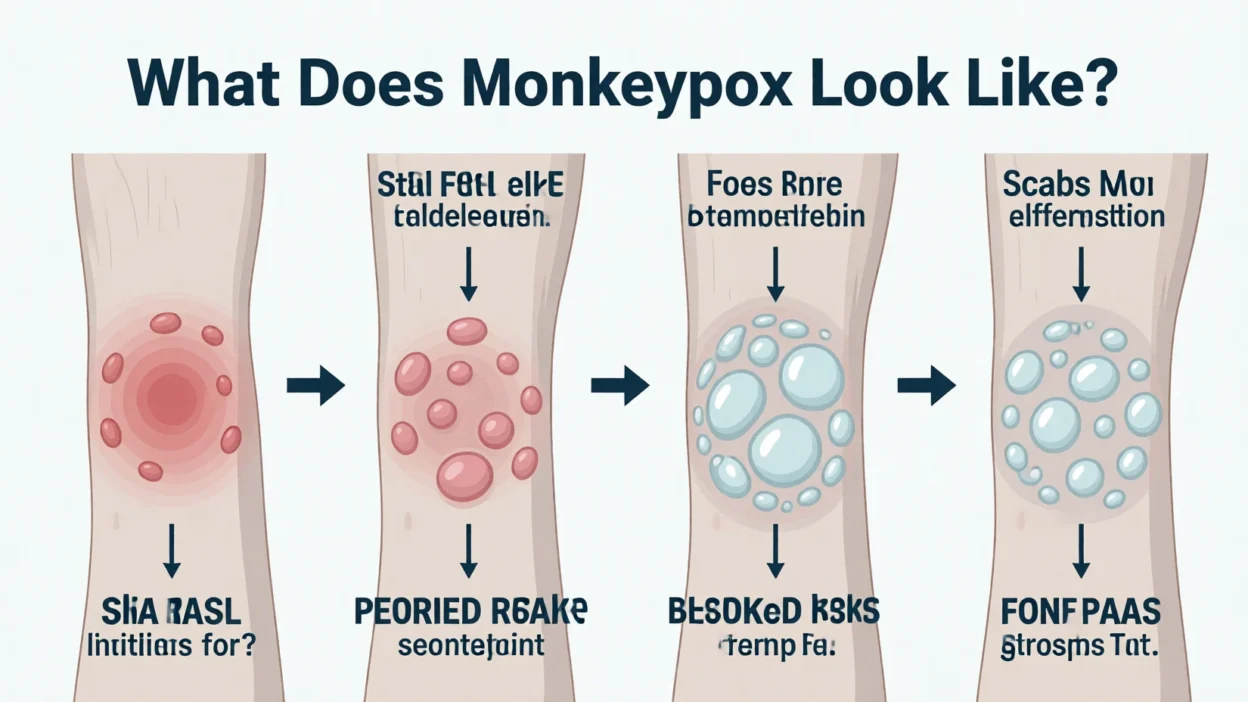
What the Monkey Pox Rash Usually Looks Like (Step by Step)
Understanding the stages helps make sense of photos and descriptions you see online.
Stage 1: flat spots
The rash may start as flat, red spots. These can be easy to miss.
Stage 2: raised bumps
The spots become firm bumps that feel different from normal skin.
Stage 3: blisters
The bumps fill with fluid and may look like pimples or chickenpox.
Stage 4: scabbing
The blisters dry out, form scabs, and eventually fall off.
The whole process can take 2–4 weeks.
Where on the Body Does Monkey Pox Appear?
When people ask what does monkey pox look like, they’re often asking where it shows up.
Common areas include:
- face
- hands and feet
- mouth or lips
- genitals
- chest or back
Not everyone gets it in the same places, which is why comparing photos online can be confusing.
Where You’ll See This Term Used Online
The phrase “what does monkey pox look like” shows up a lot in informal and neutral online spaces.
Common places
- social media comments
- group chats and dms
- reddit health threads
- twitter/x replies
- youtube comments
- facebook community posts
Tone
The tone is usually neutral to worried, not joking. People are often asking seriously or trying to help someone else.
Realistic Conversation Examples (Online Style)
Here are realistic, modern examples of how people talk about this online. All lowercase, just like real chats.
- “does anyone know what monkey pox looks like early on?”
- “i saw pics online but they all look different”
- “this rash doesn’t itch much, is that normal?”
- “what does monkey pox look like compared to acne?”
- “my friend said it starts as flat spots”
- “people online keep mixing it up with chickenpox”
- “i’m confused bc some pics look mild”
- “doctor said don’t self-diagnose from images”
These examples reflect how the topic spreads through texting culture and online chat meaning.
When to Use and When Not to Use This Term
Because this is a health-related phrase, context really matters.
Do use it when
- asking general health questions
- discussing public health info
- sharing awareness resources
- encouraging medical advice
Don’t use it when
- joking about someone’s appearance
- diagnosing others online
- spreading unverified images
- making assumptions without facts
Quick comparison table
| context | example phrase | why it works / doesn’t |
|---|---|---|
| health forum | “what does monkey pox look like early?” | works, informative |
| group chat | “should i get this checked?” | works, responsible |
| meme | “this rash = monkey pox lol” | doesn’t work |
| diagnosing | “you definitely have it” | doesn’t work |
Similar Conditions People Confuse With Monkey Pox
Many people search what does monkey pox look like because it can resemble other skin issues.
| condition | what it looks like | why it’s confused |
|---|---|---|
| chickenpox | itchy blisters | similar rash stages |
| acne | pimples | small raised bumps |
| allergic rash | red patches | skin irritation |
| herpes | clustered blisters | fluid-filled sores |
| eczema | dry patches | skin changes |
Only a medical professional can tell the difference for sure.
Common Misunderstandings Online
“it always looks severe”
Not true. Some cases are mild, others more noticeable.
“you can diagnose it from photos”
Photos alone aren’t enough for diagnosis.
“it always spreads the same way”
Symptoms and spread can vary between people.
Frequently Asked Questions
What does monkey pox look like at first?
It often starts as flat red spots before turning into raised bumps.
Does monkey pox always cause a rash?
Most cases involve a rash, but other symptoms like fever can appear first.
Is the rash painful or itchy?
It can be painful, itchy, or uncomfortable, depending on the stage.
Can monkey pox look like acne?
Yes, especially early on, which causes confusion online.
Is this term used casually on social media?
It’s usually used seriously or neutrally, not as slang.
Should you rely on online photos?
No. Photos can help awareness, but medical advice matters most.
Why This Question Spreads So Fast Online
Health questions spread quickly because:
- people want fast answers
- images go viral
- fear increases curiosity
- everyone compares symptoms
That’s why what does monkey pox look like keeps trending across platforms.
Final Thought
So, what does monkey pox look like in simple terms? It usually appears as a changing rash that goes from flat spots to raised blisters and scabs, often on visible parts of the body. While online conversations help spread awareness, they can’t replace real medical guidance.
If something looks unusual, the safest move is always checking with a healthcare professional—not just scrolling for answers.

Sara Taylor is a content writer at Whygenix.com, creating clear, engaging articles that simplify complex ideas, helping readers understand the why behind topics in education, lifestyle, and personal development.