You’re scrolling through social media, maybe TikTok or Instagram, and you see someone comment, “i’m neurodivergent, so my brain works a bit differently.”
You pause. The word sounds serious, maybe even medical. But people are using it casually—in bios, captions, DMs, and comments.
Later, you see it again in a group chat. Then in a meme. Then in a YouTube comment.
At that point, curiosity kicks in.
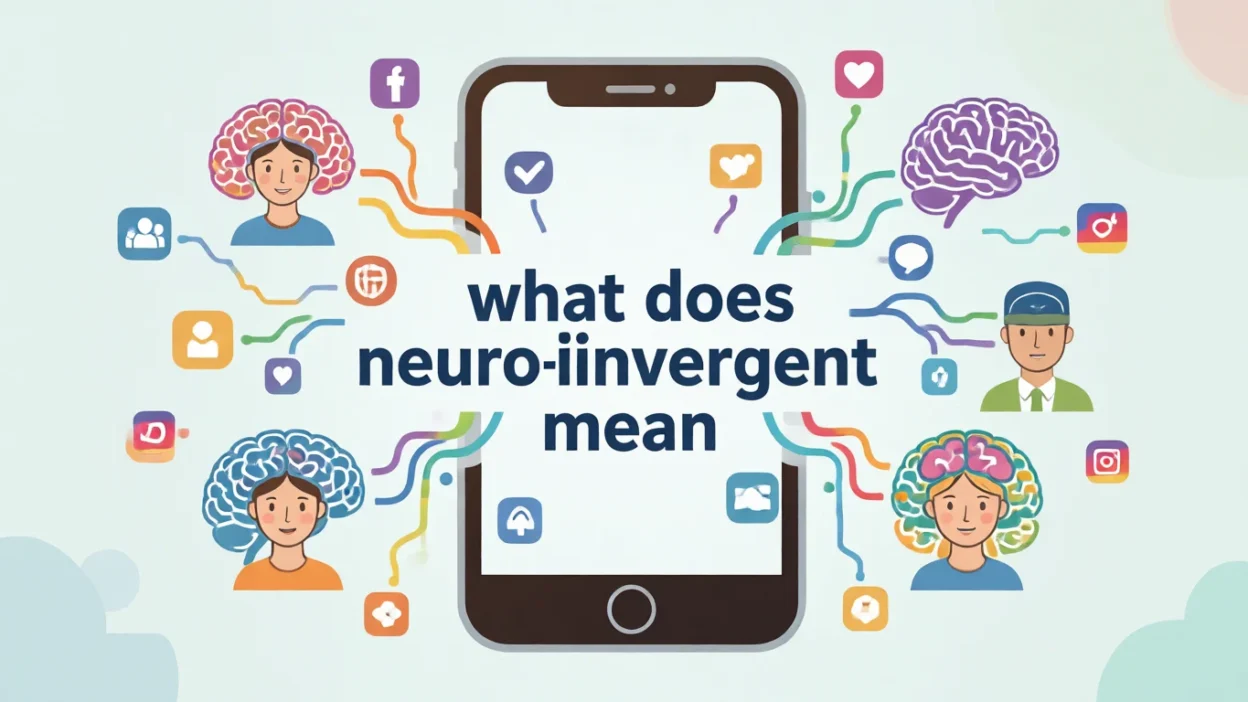
What does neurodivergent actually mean? Is it a diagnosis? A label? A slang term?
If you’ve ever felt confused but didn’t want to ask, you’re not alone. Let’s break it down in a simple, clear, and respectful way.
Quick Answer
Neurodivergent means a person’s brain works differently from what society considers “typical,” including conditions like autism, ADHD, dyslexia, and more.
What Does Neurodivergent Mean in Simple Terms?
Neurodivergent is not slang and not an insult.
It’s a descriptive term used to talk about differences in how people think, learn, feel, and process the world.
Is There a Full Form?
There’s no full form or abbreviation.
The word comes from two parts:
- Neuro = brain or nervous system
- Divergent = different or not the same
Plain-English Explanation
If someone is neurodivergent, their brain works in a way that’s different from the “average” brain, often called neurotypical.
This can affect:
- attention
- communication
- learning style
- emotions
- social interaction
It does not mean broken or wrong—just different.
Why People Use the Term
People use neurodivergent because:
- it’s more respectful than medical labels
- it focuses on differences, not deficits
- it helps people explain themselves online
- it creates community and understanding
Short Example Sentence
Bold summary: Neurodivergent means having a brain that works differently from the typical way, not better or worse—just different.
Where Is the Term Neurodivergent Commonly Used?
You’ll mostly see neurodivergent in online spaces, especially where people talk openly about mental health and identity.
Common Places You’ll See It
- Texting & DMs – explaining behavior or needs
- Social media bios – identity or self-description
- Comments & threads – sharing experiences
- Online forums – autism, ADHD, mental health spaces
- Gaming chats – explaining focus or communication style
- Workplace chats – inclusion and accessibility talks
Tone of the Term
- Neutral to respectful
- Often informal online
- Can be formal in education or work settings
- Never meant as a joke when used correctly
Realistic Texting & Chat Examples (7–10)
Here’s how neurodivergent actually shows up in real conversations:
- “i’m neurodivergent, so i need clear instructions”
- “sorry if i seem quiet, i’m neurodivergent and social stuff is hard”
- “that meme is so neurodivergent-coded lol”
- “as a neurodivergent person, routine helps me a lot”
- “he’s not rude, he’s neurodivergent”
- “i’m neurodivergent and hyperfocus is real”
- “being neurodivergent in school was tough”
- “this app is great for neurodivergent users”
- “my brain’s neurodivergent, chaos but creative”
When to Use and When Not to Use Neurodivergent
Using the term correctly matters. It’s about respect.
✅ Do Use It When
- someone uses it for themselves
- discussing brain differences respectfully
- talking about accessibility or inclusion
- explaining personal needs or experiences
- sharing educational content
❌ Don’t Use It When
- mocking someone’s behavior
- diagnosing others without consent
- using it as an insult or joke
- assuming all traits are the same
- replacing someone’s preferred term
Comparison Table
| Context | Example Phrase | Why It Works / Doesn’t Work |
|---|---|---|
| Self-description | “i’m neurodivergent” | respectful and accurate |
| Education | “support neurodivergent students” | inclusive language |
| Joke | “you’re so neurodivergent lol” | ❌ dismissive |
| Diagnosis | “he’s neurodivergent” | ❌ not your place |
| Advocacy | “neurodivergent-friendly design” | thoughtful and correct |
Similar Terms and Alternatives
Neurodivergent isn’t the only term you’ll see. Here’s how others compare:
| Term | Meaning | When to Use |
|---|---|---|
| Neurotypical | Brain works in the typical way | comparisons or discussions |
| Autistic | On the autism spectrum | when someone prefers it |
| ADHD | Attention-related condition | medical or personal use |
| Learning difference | Non-typical learning style | education settings |
| ND | Short for neurodivergent | casual online chat |
| Neurodiverse | Group with many brain types | community or teams |
👉 Important note: neurodiverse refers to a group, not one person.
Frequently Asked Questions (FAQ)
1. Is neurodivergent a medical diagnosis?
No.
It’s a descriptive umbrella term, not a diagnosis.
2. Is neurodivergent the same as autistic?
Not exactly.
Autism is one type of neurodivergence, but not the only one.
3. Can anyone call themselves neurodivergent?
Usually yes, if it fits their experience.
But people should avoid using it casually without understanding it.
4. Is the term neurodivergent rude or offensive?
No.
It’s generally considered respectful and inclusive.
5. Do only young people use this term?
No.
It’s popular with Gen Z and millennials, but used by all ages.
6. Is neurodivergent used on social media a lot?
Yes.
Especially on TikTok, Twitter (X), Reddit, and Instagram.
7. Can neurodivergent people live “normal” lives?
Absolutely.
They just may need different support, tools, or environments.
Why the Term Matters in Online Culture
In texting culture and social media slang, neurodivergent helps people:
- explain themselves without shame
- set boundaries clearly
- find community
- feel seen and understood
Instead of hiding differences, the term normalizes them.
That’s why it shows up so often in modern digital conversations.
Final Thought
So, what does neurodivergent mean?
It means someone’s brain works differently from the typical pattern—and that difference is part of who they are, not something to “fix.”
In today’s online world, the term helps people communicate clearly, build empathy, and create more inclusive spaces. When used with respect, it’s a powerful word that brings understanding instead of labels.

Jozaf Jo is a content writer at Whygenix.com, crafting clear, engaging articles that simplify complex ideas, helping readers understand the why behind topics in education, lifestyle, and personal growth.