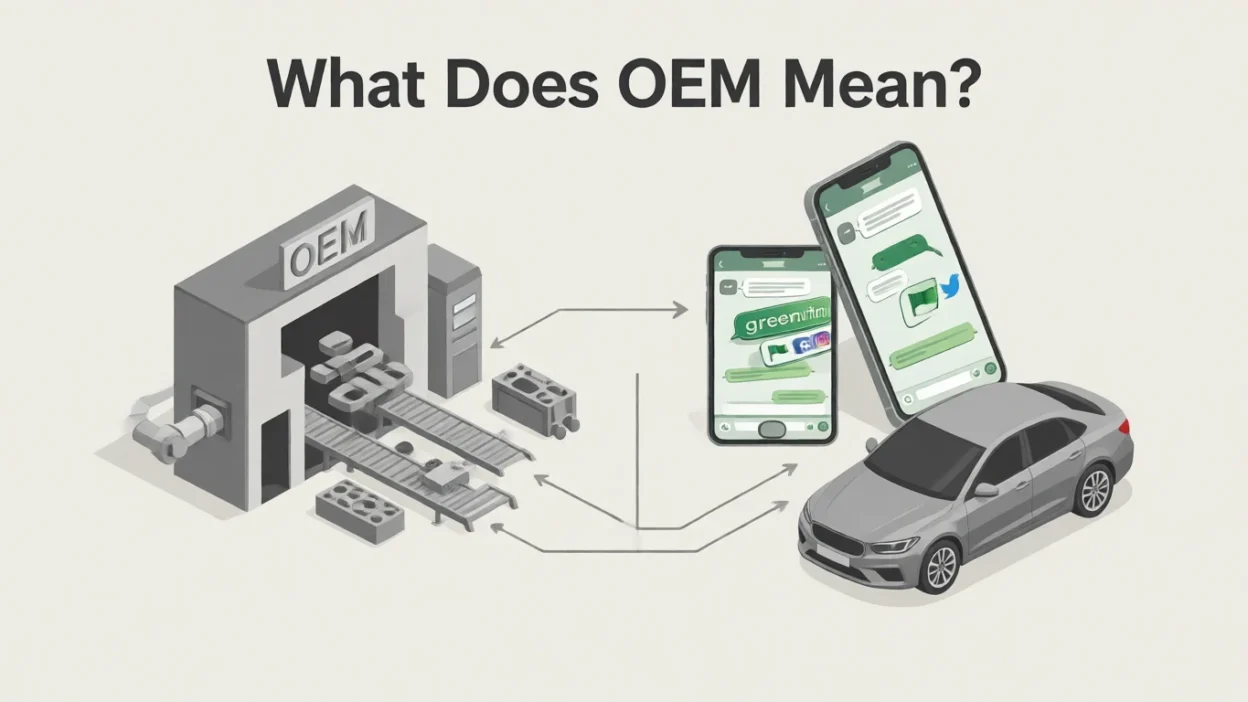
The first time many people see OEM, it’s usually in a place that makes you pause. Maybe you’re reading phone reviews, scrolling through Reddit, or chatting with a friend about buying a charger or car part.
Someone casually says, “just get the oem one,” and the conversation moves on—except you’re stuck wondering what that actually means. Is it better? Is it cheaper? Is it the same as original?
In today’s online world, where buying advice spreads through comments, DMs, and group chats, OEM pops up constantly. The good news is that once you understand it, the term becomes simple, practical, and surprisingly useful.
Quick Answer:
OEM means Original Equipment Manufacturer, referring to a product or part made by the same company that made the original item.
What Does OEM Mean in Text and Online Chats?
Full form: OEM = Original Equipment Manufacturer
In plain English, OEM means original maker. When a product or part is called OEM, it usually comes from the same manufacturer that produced the original version used in the device, car, or system when it was first made.
For example, if your phone came with a specific battery from the factory, that battery is OEM. If you later buy the same type of battery made by that same manufacturer, it’s still OEM—even if it’s sold separately.
People use OEM in texting and online chats because it’s short, clear, and widely understood in tech and shopping communities.
Why people use it:
- It signals original quality
- It helps compare products
- It saves time typing
- It sounds informed but not complicated
Example sentence:
“the oem cable costs more, but it’s safer.”
Bold summary:
OEM means a product or part made by the original manufacturer, not a random third-party brand.
Where Is the Term “OEM” Commonly Used?
You’ll see OEM in many online spaces, especially where people talk about products and quality.
Common places:
- Text messages and group chats
- Online shopping reviews
- Reddit and tech forums
- Gaming and PC-building chats
- Social media comments
- DMs about buying advice
- Car and bike discussion groups
Tone:
The tone of OEM is mostly neutral. It works in casual chats and semi-formal discussions. It’s not slang, but it’s not overly technical either.
OEM is especially common in conversations about:
- Phones and accessories
- Laptops and computers
- Cars and auto parts
- Appliances and electronics
Realistic Texting and Chat Examples (Lowercase)
Here’s how oem naturally appears in everyday online conversations:
- “is that charger oem or third party?”
- “i replaced it with an oem part.”
- “aftermarket is cheaper but oem lasts longer.”
- “the oem screen looks way better.”
- “reddit says oem batteries are safer.”
- “this laptop came with an oem charger.”
- “i always go oem for car parts.”
- “non-oem cables heat up fast.”
- “he sold me an oem replacement, not a copy.”
These examples show how normal and useful the term is in informal chat.
When to Use and When Not to Use “OEM”
Knowing when to use OEM helps you sound clear instead of confusing.
✅ When to Use It
- When comparing original vs third-party products
- In tech, auto, or gadget discussions
- While shopping or reading reviews
- When quality and compatibility matter
- In advice or recommendation chats
❌ When Not to Use It
- In emotional or creative conversations
- With people unfamiliar with product terms
- In school essays without explanation
- When simpler words work better
Comparison Table
| Context | Example Phrase | Why It Works / Doesn’t |
|---|---|---|
| tech chat | “get the oem battery” | clear and helpful |
| product review | “oem part fits perfectly” | useful info |
| casual talk | “that movie was oem” | confusing |
| school writing | “oem items are best” | needs explanation |
Similar Words and Alternatives to OEM
Sometimes it’s better to use a clearer or more casual alternative.
| Term | Meaning | When to Use |
|---|---|---|
| original part | made by the original brand | general audience |
| genuine | authentic, not fake | sales or reviews |
| factory original | same as original build | cars and electronics |
| manufacturer-made | produced by the brand | formal tone |
| aftermarket | made by another company | comparison talks |
| third-party | not original manufacturer | neutral discussions |
Using these alternatives can help avoid confusion in mixed audiences.
FAQs About “OEM”
1. Is OEM the same as original?
Most of the time, yes. OEM products are made by the original manufacturer, though packaging may differ.
2. Is OEM better than aftermarket?
Often, but not always. OEM usually fits better and matches original quality, but some aftermarket options can be good too.
3. Is OEM slang?
No. OEM is a technical term, but it’s widely used in casual texting and online chats.
4. Why are OEM products sometimes cheaper?
They may lack fancy packaging, branding, or retail extras.
5. Can OEM parts be sold separately?
Yes. Many OEM parts are sold for repairs and replacements.
6. Is OEM only for electronics?
No. It’s used for cars, bikes, appliances, software, and more.
7. Should I always choose OEM?
It depends on budget, safety, and how important long-term reliability is.
Final Thought
So, what does OEM mean in today’s digital and texting culture? It’s a simple way to say a product comes from the original maker—the same source as the part that came with the device when it was new.
Whether you’re chatting with friends, reading reviews, or shopping online, understanding OEM helps you make smarter choices and follow conversations with confidence.
It’s not slang, but it fits perfectly into modern online communication: short, clear, and useful.

Sara Taylor is a content writer at Whygenix.com, creating clear, engaging articles that simplify complex ideas, helping readers understand the why behind topics in education, lifestyle, and personal development.