It usually starts with a photo in a group chat.
Someone posts a picture of a leafy plant and asks, “is this poison oak?”
Maybe you’ve seen that moment online—or lived it yourself after a hike, camping trip, or backyard cleanup.
Poison oak gets talked about a lot on social media, especially when someone ends up with an itchy rash and starts asking questions fast.
But many people still wonder the same thing: what does poison oak look like, really?
If you’ve ever scrolled through comments trying to figure it out, this guide will make it simple, clear, and easy to remember.
Quick Answer
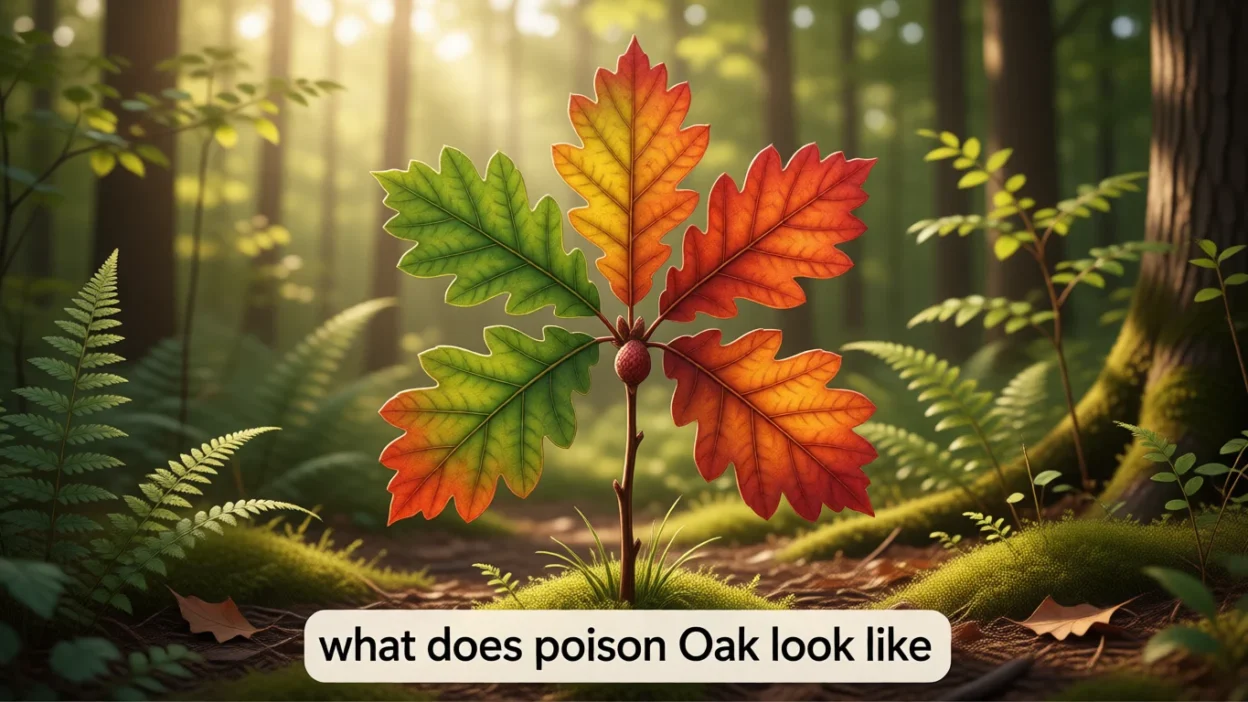
Poison oak usually has three shiny green leaves per stem, often shaped like oak leaves, and can grow as a bush or a climbing vine.
What Does Poison Oak Look Like?
Full Form
Poison oak is the common name for a plant called Toxicodendron diversilobum (western poison oak) or Toxicodendron pubescens (eastern poison oak).
Plain-English Explanation
Poison oak is a plant that causes skin rashes when touched.
The rash comes from an oily substance in the plant called urushiol.
The tricky part? Poison oak doesn’t always look the same. Its leaves change color with the seasons, and it can grow in different shapes depending on where it lives.
Short Example Sentence
Bold summary: Poison oak is a three-leaf plant that can be green, red, or yellow and often looks like oak leaves.
Key Features That Help You Identify Poison Oak
Knowing these details can help you spot poison oak quickly.
1. Three Leaves Per Stem
This is the biggest clue.
People often say:
“leaves of three, let it be.”
Each stem usually has:
- one leaf at the top
- two leaves on the sides
2. Leaf Shape
- leaves often look like oak leaves
- edges may be smooth or slightly jagged
- the middle leaf usually has a longer stem
3. Leaf Color Changes by Season
Poison oak doesn’t stay green all year.
- spring: bright green leaves
- summer: darker green and shiny
- fall: red, orange, or yellow
- winter: bare sticks or woody vines
4. Shiny or Dull Surface
Leaves can look:
- shiny
- slightly waxy
- or sometimes fuzzy (especially eastern poison oak)
How Poison Oak Grows
Poison oak can grow in more than one way, which adds to the confusion.
As a Shrub
- common in open areas
- looks like a low bush
- waist-high or taller
As a Vine
- climbs trees or fences
- woody stem
- leaves grow along the vine
Both forms are dangerous to touch.
Where You’re Most Likely to See Poison Oak
Poison oak is common in:
- forests
- hiking trails
- parks
- backyards
- roadsides
- camping areas
It’s especially common on the west coast of the United States, but eastern versions exist too.
Where the Term “Poison Oak” Is Commonly Used
You’ll see people talk about poison oak in many everyday spaces online.
Common Places
- texting with friends
- social media posts
- hiking and camping groups
- outdoor forums
- comment sections
- neighborhood chats
Tone of Use
- casual
- informational
- warning-based
People usually mention it to warn others or ask for help.
Realistic Conversation Examples
Here’s how poison oak comes up in real chats:
- “does this plant look like poison oak?”
- “i think i touched poison oak yesterday”
- “watch out, poison oak on the trail”
- “my rash is from poison oak for sure”
- “poison oak looks different in fall”
- “is poison oak worse than poison ivy?”
- “don’t burn it—poison oak smoke is bad”
- “three leaves = poison oak, right?”
When to Use and When NOT to Use the Term
✅ When to Use “Poison Oak”
- identifying a plant
- warning others
- talking about rashes
- sharing outdoor safety tips
- asking for advice
❌ When NOT to Use It
- joking about serious rashes
- confusing it with safe plants
- using it as slang
- guessing without checking
Comparison Table
| Context | Example Phrase | Why It Works / Doesn’t |
|---|---|---|
| hiking | “poison oak near the path” | helpful warning |
| yard work | “this might be poison oak” | cautious |
| cooking | “poison oak salad” | ❌ unsafe joke |
| plant ID | “looks like poison oak” | reasonable |
| casual insult | “you’re poison oak” | ❌ inappropriate |
Plants Often Confused With Poison Oak
Many people misidentify poison oak. Here are common look-alikes.
| Plant | How It’s Different | When Confused |
|---|---|---|
| poison ivy | smoother leaf edges | very common |
| blackberry | thorns, more leaves | similar areas |
| raspberry | fuzzy stems | same regions |
| oak saplings | more than three leaves | early growth |
| maple seedlings | different leaf shape | spring |
When in doubt, don’t touch.
Why People Ask “What Does Poison Oak Look Like?”
People usually search this because:
- they were outdoors
- they touched an unknown plant
- they developed a rash
- they saw a photo online
- they want to avoid exposure
It’s a safety question, not just curiosity.
What Happens If You Touch Poison Oak?
Touching poison oak can cause:
- red skin
- itching
- swelling
- blisters
The reaction usually appears within 12–72 hours.
The oil spreads easily through:
- skin
- clothing
- pets
- tools
That’s why recognizing poison oak early matters.
FAQ: Common Questions About Poison Oak
1. What does poison oak look like exactly?
It usually has three oak-shaped leaves, changes color by season, and grows as a bush or vine.
2. Does poison oak always have three leaves?
Almost always, yes.
That’s the biggest identifying feature.
3. Can poison oak be red?
Yes.
In fall, poison oak leaves often turn red or orange.
4. Is poison oak shiny?
Often, yes.
Many leaves look shiny or waxy, especially in summer.
5. Can poison oak grow in my yard?
Yes.
It can grow in yards, gardens, and fence lines.
6. Is poison oak dangerous to pets?
Pets usually don’t get rashes, but they can carry the oil on their fur and pass it to humans.
7. Can you get poison oak from dead plants?
Yes.
Dead poison oak still contains urushiol and can cause rashes.
Final Thought
So, what does poison oak look like?
It’s a plant with three oak-shaped leaves, changing colors through the seasons, growing as a bush or vine, and often blending into nature.
Knowing how to spot it can save you days—or weeks—of itching and discomfort.
When in doubt, don’t touch.
And remember: leaves of three, let it be.

Sara Taylor is a content writer at Whygenix.com, creating clear, engaging articles that simplify complex ideas, helping readers understand the why behind topics in education, lifestyle, and personal development.