You’re scrolling through a group chat, reading comments on a post, or checking someone’s bio, and you spot the word “proficient.”
Maybe it says, “i’m proficient in video editing” or “she’s proficient at coding.” You pause for a second. You kind of know what it means… but not fully. Is it the same as expert? Does it sound formal? Can you use it in normal texting, or is it more of a resume word?
If you’ve ever felt unsure about how this word really works in modern conversations, you’re not alone. “Proficient” shows up everywhere today—from social media and DMs to online chats and job posts. Let’s break it down in a simple, friendly way.
Quick Answer
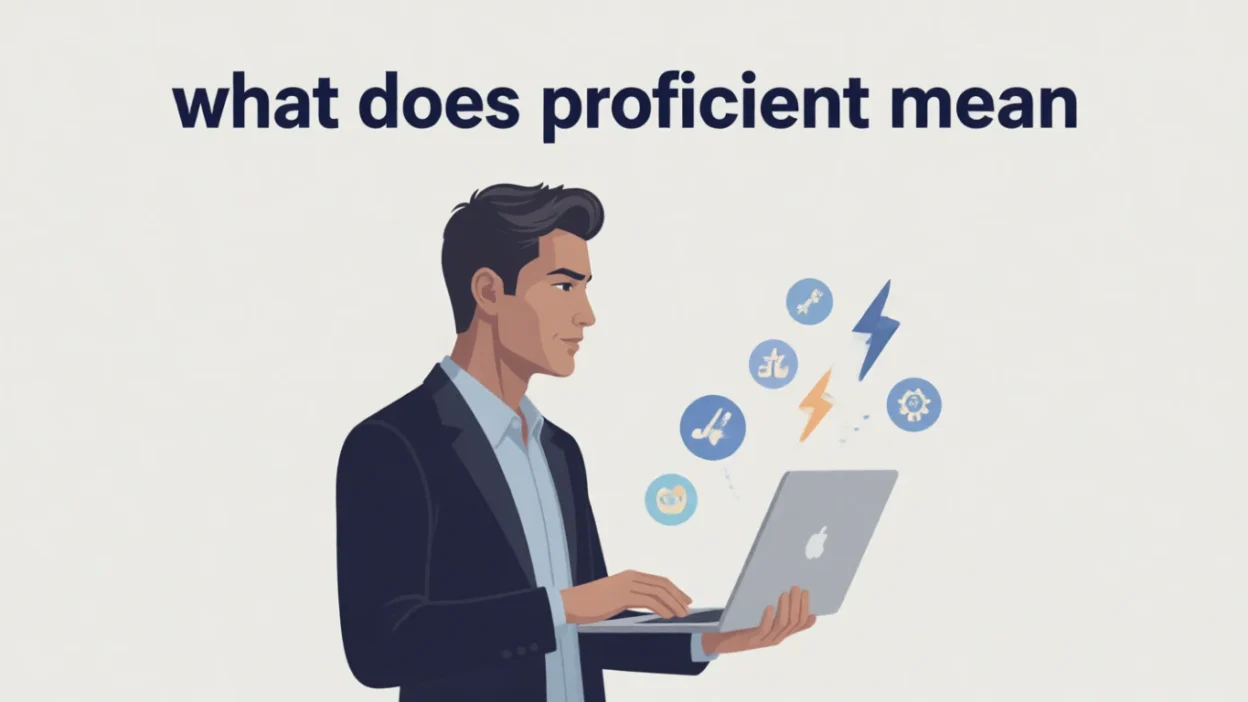
“Proficient” means being skilled and capable at something, but not necessarily the best or an expert.
What Does Proficient Mean in Simple Terms?
Is there a full form?
No. Proficient is not an abbreviation or slang acronym. It’s a full English word that has been around for a long time.
Plain-English meaning
When someone says they are proficient at something, they mean they can do it well and confidently. They understand it, can use it properly, and don’t need constant help.
Being proficient sits between beginner and expert. You’re not just learning anymore, but you’re also not claiming to be the best.
Why people use the word “proficient”
People use proficient because it sounds:
- Clear and professional
- Honest (not braggy like “master”)
- Flexible for many situations
It’s popular in resumes, profiles, online bios, and even casual chats when someone wants to sound confident but realistic.
Simple example sentence
Bold summary: Proficient means having a good level of skill and confidence in something without claiming expert status.
Where Is the Word “Proficient” Commonly Used?
You’ll see “proficient” across many online and offline spaces. It’s not slang, but it fits easily into modern digital communication.
Common places you’ll see it
- Texting & DMs: when explaining skills
- Social media bios: instagram, linkedin, twitter
- Comments: explaining abilities or experience
- Online forums: tech, gaming, learning communities
- Gaming chats: talking about skill levels
- School or work chats: describing strengths
Tone of the word
- Neutral to slightly formal
- Not rude or casual slang
- Safe for both professional and friendly conversations
You can use proficient in a relaxed way, but it still sounds polished.
Realistic Conversation Examples (Modern Chat Style)
Here are some natural, lowercase examples you might actually see online:
- “i’m proficient in excel but google sheets is still confusing”
- “she’s proficient at editing reels, that’s why her content pops”
- “not an expert yet, just proficient enough to help”
- “he’s proficient in three languages which is wild”
- “i need someone proficient in python for this project”
- “i’d say i’m proficient, not advanced”
- “they’re proficient at the game, just not ranked yet”
- “i’m proficient with basic design tools”
- “are you proficient in video editing or just starting?”
These examples show how naturally the word fits into everyday texting culture.
When to Use and When Not to Use “Proficient”
✅ When to use “proficient”
- When you want to sound confident but honest
- When describing skills, abilities, or experience
- In resumes, bios, comments, or chats
- When you’re better than average but not a master
❌ When not to use “proficient”
- When joking or being playful (it may sound too serious)
- In very emotional or casual slang-heavy chats
- When you actually mean expert or beginner
- In sarcastic memes or jokes (it can feel stiff)
Quick comparison table
| Context | Example Phrase | Why It Works / Doesn’t |
|---|---|---|
| resume | “proficient in microsoft excel” | sounds clear and professional |
| group chat | “i’m proficient at math lol” | works, but sounds slightly formal |
| meme post | “bro is proficient af 😂” | sounds awkward |
| job post | “need someone proficient in editing” | perfect fit |
Similar Words and Alternatives to “Proficient”
Sometimes proficient isn’t the best choice. Here are good alternatives and when to use them:
| Word | Meaning | When to Use |
|---|---|---|
| skilled | has ability through practice | casual or professional |
| good at | simple and friendly | texting and chats |
| experienced | has done it for a long time | work or profiles |
| capable | able to do the task | neutral tone |
| advanced | higher than intermediate | learning levels |
| expert | very high skill level | only when true |
| decent at | okay but not strong | casual chats |
Tip: If you want to sound more relaxed, “good at” works better. If you want clarity and respect, “proficient” is a strong choice.
Frequently Asked Questions (FAQs)
1. Is “proficient” the same as expert?
No. Proficient means skilled, but expert means very high mastery. Proficient is a step below expert.
2. Can I use “proficient” in texting?
Yes. It’s common in texting, DMs, and online chats, especially when talking about skills.
3. Is “proficient” too formal for social media?
Not really. It’s neutral. It works well in bios, comments, and replies.
4. What age group uses the word “proficient”?
Mostly teens, students, professionals, and adults—especially when talking about learning or skills.
5. Can “proficient” be misunderstood?
Sometimes. Some people may think it means expert, so context matters.
6. Is “proficient” positive or negative?
It’s positive. It shows confidence without exaggeration.
7. What’s a simpler word than proficient?
“Good at” or “skilled” are simpler and more casual alternatives.
Final Thought
So, what does proficient mean? In simple terms, it means being good, capable, and confident at something without claiming to be the best. That’s why the word works so well in modern digital communication—it’s honest, flexible, and clear.
Whether you’re chatting with friends, writing a bio, commenting online, or explaining your skills, “proficient” helps you sound reliable without overdoing it. Now that you know how and when to use it, you can drop it into conversations with confidence.

Joy Root is a content writer at Whygenix.com, creating clear, engaging articles that explain complex ideas simply, helping readers understand why topics matter in everyday life and personal growth.