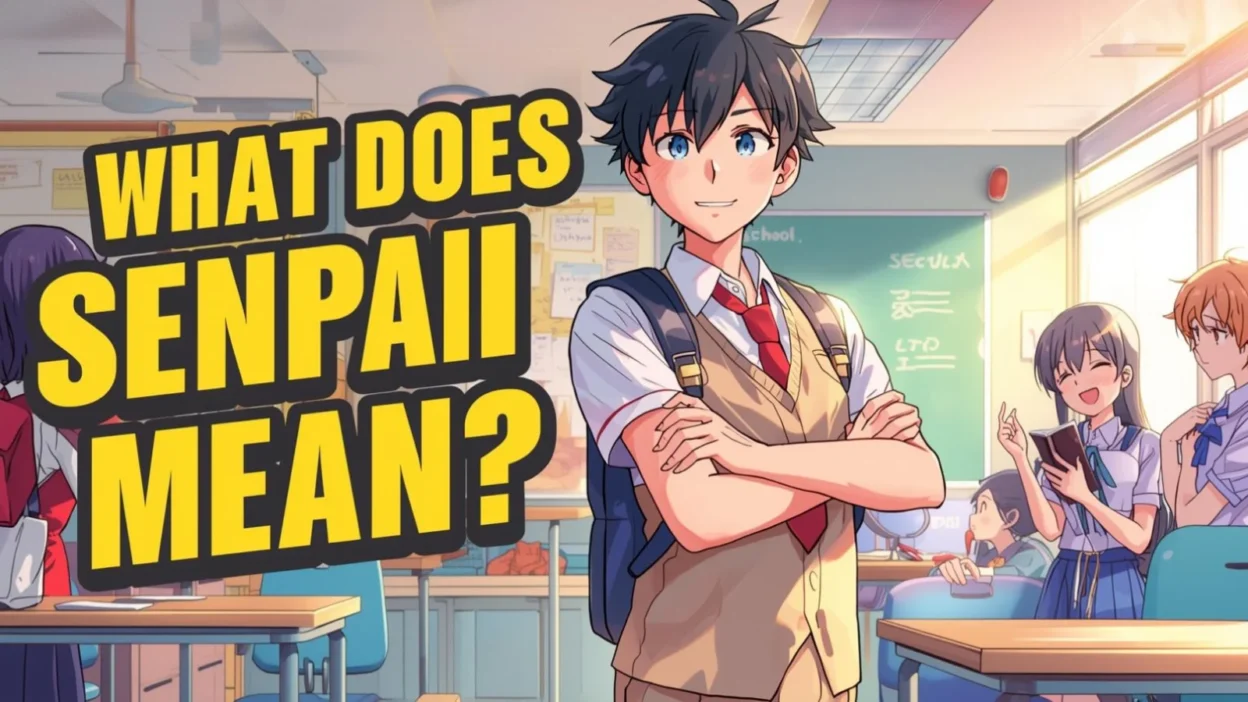
The first time I saw someone type “notice me, senpai” in a comment section, I thought it was just random internet slang. It was under an anime clip, and people were spamming it like an inside joke.
Later, I heard it again in a gaming chat. Then on TikTok. Then in memes. At that point, I had to ask: what does senpai mean, and why is everyone saying it?
If you’ve seen this word pop up in text messages, online chat, or social media slang, you’re not alone. Let’s break it down in a simple, clear way.
Quick Answer: Senpai is a Japanese word that means someone older or more experienced who you look up to, like a senior at school or a mentor.
What Does Senpai Mean? Full Meaning Explained
The word senpai (sometimes spelled sempai) comes from Japanese culture.
There is no long “full form” because it’s not a texting abbreviation. It’s an actual Japanese word used in real life.
Plain-English Explanation
In simple terms, senpai means a senior person you respect.
It can refer to:
- An older student at school
- Someone with more experience at work
- A senior member in a club
- A mentor or guide
In Japan, it shows respect toward someone who has been around longer or knows more than you.
Why Do People Use It Online?
In anime and manga, characters often call older classmates or crushes “senpai.” Over time, fans started using it in memes and online chat meaning.
Now, on social media, people use senpai to:
- Joke about having a crush
- Show admiration
- Act playfully dramatic
- Refer to someone they look up to
Example Sentence
In short: Senpai means a respected senior or someone you admire who has more experience than you.
How Senpai Became Popular in Texting Culture
If you’re wondering what does senpai mean in social media slang, here’s the story.
Anime became more popular worldwide. Fans started copying phrases they heard in shows. One phrase stood out:
“notice me, senpai.”
This became a meme. It usually meant:
- “please pay attention to me”
- “i like you”
- “i admire you”
Soon, the word spread across:
- TikTok
- Twitter (X)
- Discord
- Gaming chats
- Meme pages
Even people who don’t watch anime now use it in informal chat.
Tone of the Word “Senpai”
- In Japan: respectful and somewhat formal
- In anime fandom: playful
- In memes: humorous or dramatic
- In texting culture: casual and informal
So the tone depends on context.
Realistic Conversation Examples (Lowercase Chat Style)
Here’s how senpai is used in modern online chats:
- “teach me your ways, senpai”
- “notice me senpai pls 😭”
- “he’s my gym senpai fr”
- “ok senpai i’ll follow your advice”
- “my art senpai just posted again”
- “why does my senpai never reply”
- “gaming senpai carrying the squad”
- “lowkey crushing on my senpai”
- “that’s senpai level skill”
Notice how it fits smoothly into texting culture and informal chat.
When to Use and When Not to Use Senpai
Like most internet terms, context matters.
✅ Use Senpai When:
- Talking about anime or manga
- Joking in group chats
- Referring to someone you admire
- Playfully calling someone skilled
- Posting memes
❌ Don’t Use Senpai When:
- Writing professional emails
- Talking to someone who doesn’t know anime culture
- In formal business meetings
- In serious academic writing
Quick Comparison Table
| Context | Example Phrase | Why It Works / Doesn’t |
|---|---|---|
| anime forum | “he’s my senpai” | culturally accurate |
| gaming chat | “carry us, senpai” | playful tone works |
| job interview | “you’re my senpai” | too informal |
| office email | “thanks senpai” | unprofessional |
Senpai works best in casual, online spaces.
Similar Words or Alternatives
If you’re learning what does senpai mean, you might also see these related terms:
| Word | Meaning | When to Use |
|---|---|---|
| Sensei | teacher or master | martial arts, formal respect |
| Mentor | experienced guide | school or workplace |
| OG | original, respected person | informal chat |
| mentor | expert in a skill | semi-formal |
| Master | highly skilled person | serious tone |
| Boss | skilled or respected leader | casual praise |
What’s the Difference Between Senpai and Sensei?
- Senpai = senior or experienced person
- Sensei = teacher or instructor
Senpai is more about seniority. Sensei is about teaching.
Common Misunderstandings About Senpai
Many people think senpai only means “crush.”
That’s not fully correct.
While anime memes often connect senpai with romantic feelings, the real meaning is about respect and seniority.
Another confusion is thinking senpai is texting abbreviation slang like LOL. It’s not. It’s a real word from Japanese culture.
Frequently Asked Questions
1. What does senpai mean in simple words?
It means a senior or experienced person you respect or look up to.
2. Is senpai romantic?
Not always. It can be romantic in anime memes, but it mainly means respected senior.
3. Is senpai a texting abbreviation?
No. It’s a real Japanese word, not chat shorthand.
4. Who uses the word senpai?
Mostly anime fans, gamers, and younger social media users.
5. Is senpai formal or informal?
In Japan, it’s respectful. Online, it’s usually playful and informal.
6. Can you call anyone senpai?
Yes, but it works best for someone older or more experienced.
7. Is senpai still popular?
Yes. It still appears in memes, TikTok videos, and gaming communities.
Why Understanding Senpai Matters in Modern Digital Communication
If you spend time online, you’ll see words from many cultures.
Knowing what does senpai mean helps you:
- Understand anime jokes
- Follow meme trends
- Join fandom conversations
- Avoid using it in the wrong setting
Language online moves fast. Words cross borders quickly. Senpai is a great example of how culture blends into texting culture and social media slang.
Final Thought
So, what does senpai mean? It means a respected senior or someone more experienced who you admire. In real Japanese culture, it shows respect. In anime and online chat meaning, it often becomes playful or dramatic.
It’s not a texting abbreviation, but it fits smoothly into modern informal chat. Whether you’re joking in a group chat, reacting to a meme, or talking about your favorite anime character, now you understand exactly what senpai means—and when to use it.

Joy Root is a content writer at Whygenix.com, creating clear, engaging articles that explain complex ideas simply, helping readers understand why topics matter in everyday life and personal growth.