The first time I heard the word serotonin, it wasn’t in a biology class. It was in a late-night group chat. Someone texted, “my serotonin is gone today,” and everyone instantly understood the vibe—low energy, bad mood, zero motivation.
That one word said it all. Since then, serotonin pops up everywhere: tweets, reels, wellness posts, even memes. But what does it actually mean?
And more importantly, what does serotonin do in your body and brain? If you’ve ever wondered why people blame or praise serotonin for how they feel, this guide breaks it all down in simple, real-life language.
Quick Answer
Serotonin is a chemical messenger in your body that helps control mood, sleep, appetite, and overall emotional balance.
What Does Serotonin Do? (Plain Meaning)
Full Meaning Explained Simply
Serotonin is a natural chemical made by your body. Its full scientific name is 5-hydroxytryptamine (5-HT), but don’t worry—you’ll never see people typing that in chats.
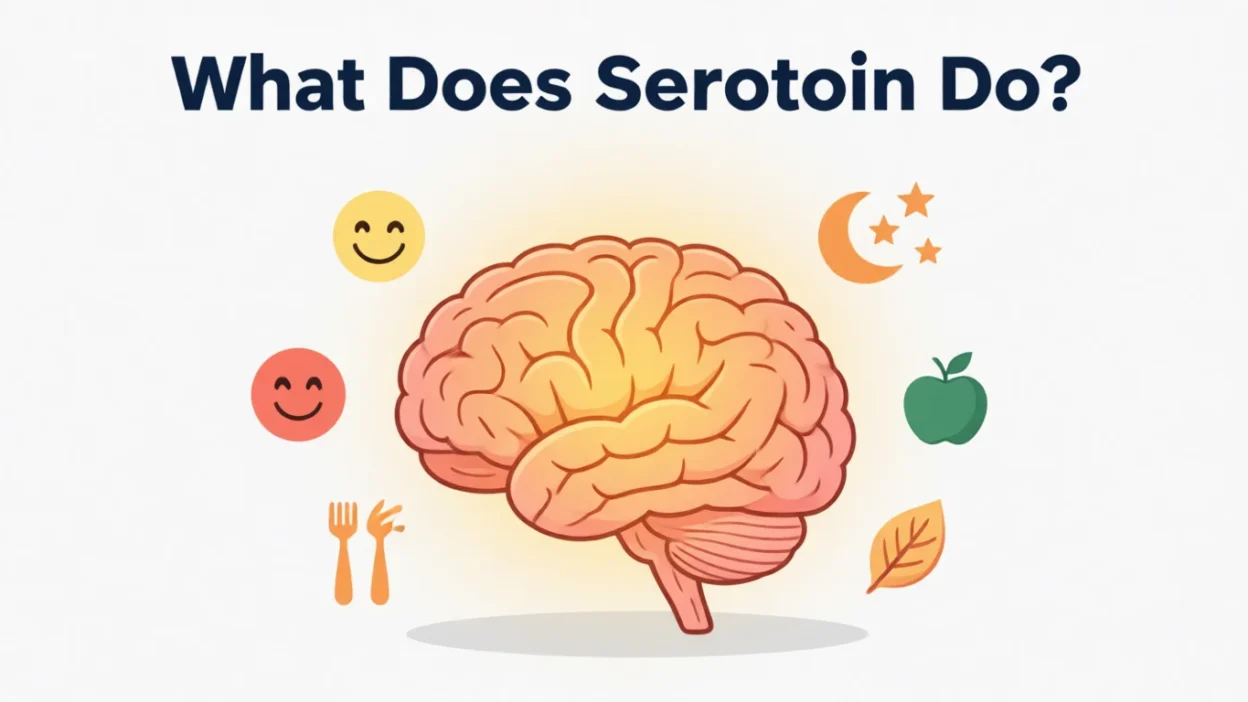
In plain English, serotonin helps your brain and body feel stable and balanced. It plays a big role in mood, happiness, sleep, digestion, and even focus.
Why people talk about it online:
People use the word serotonin to explain how they feel emotionally—especially happiness, calmness, or lack of motivation.
Example Sentence
Bold summary: Serotonin helps regulate mood, sleep, appetite, and emotional well-being.
What Serotonin Does in the Body and Brain
Serotonin works behind the scenes all day, every day.
Here’s what it helps with:
- Mood control: Helps you feel calm, happy, and emotionally steady
- Sleep regulation: Plays a role in healthy sleep cycles
- Appetite and digestion: Most serotonin is actually found in your gut
- Focus and memory: Supports clear thinking
- Stress response: Helps balance anxiety and tension
When serotonin levels are balanced, people often feel more relaxed and positive. When levels are low, mood can dip.
Where the Term “Serotonin” Is Commonly Used Online
You’ll see serotonin mentioned in many digital spaces:
- Texting & DMs: “need serotonin asap”
- Social media posts: wellness, fitness, and mental health content
- Comments & memes: used humorously to describe mood
- Online forums: discussions about mental health and lifestyle
- Gaming chats: joking about wins or losses affecting mood
Tone
The tone is usually casual or neutral. In medical or educational content, it becomes formal, but in texting culture, it’s very relaxed.
Realistic Conversation Examples (Modern Chat Style)
Here’s how people actually use serotonin in everyday online chats:
- “that coffee gave me instant serotonin”
- “my serotonin levels are on vacation today”
- “music is my main serotonin source”
- “why does this song boost my serotonin so much”
- “zero serotonin, zero motivation”
- “sunlight = free serotonin”
- “that win restored my serotonin”
- “i need a serotonin reset”
- “food first, serotonin later”
These examples show how serotonin is used as emotional shorthand in informal chat.
When to Use and When Not to Use the Term
✅ When to Use “Serotonin”
- Casual conversations about mood
- Social media captions and comments
- Light mental-health discussions
- Jokes or memes about happiness
❌ When Not to Use It
- Serious medical advice
- Professional or clinical settings
- Diagnosing mental health conditions
- Formal work communication
Comparison Table
| Context | Example Phrase | Why It Works / Doesn’t |
|---|---|---|
| casual chat | “this song boosts my serotonin” | relatable and informal |
| social media | “daily serotonin source” | fits online tone |
| medical setting | “my serotonin is low” | too vague |
| work email | “need serotonin today” | unprofessional |
Similar Words and Alternatives People Use
People don’t always say serotonin. Here are common alternatives:
| Term | Meaning | When to Use |
|---|---|---|
| dopamine | reward and motivation chemical | excitement, wins |
| endorphins | pain relief and pleasure | exercise, laughter |
| good vibes | positive emotional state | casual chats |
| mood boost | feeling happier | neutral tone |
| mental energy | emotional strength | general discussion |
Each term fits slightly different moments, but serotonin is the go-to for overall mood balance.
Frequently Asked Questions (FAQ)
1. Is serotonin only about happiness?
No. It also affects sleep, digestion, focus, and emotional stability.
2. Is serotonin slang or a medical term?
It’s both. Medically, it’s a brain chemical. Online, it’s used casually.
3. Can food really affect serotonin?
Yes. Certain foods help your body make serotonin naturally.
4. Do all age groups use the word serotonin online?
It’s most common with teens and young adults but understood widely.
5. Is serotonin the same as dopamine?
No. Dopamine is about reward and motivation; serotonin is about balance.
6. Can low serotonin cause bad moods?
Low levels are often linked to low mood, but only doctors diagnose issues.
7. Is it okay to joke about serotonin?
Yes, casually—but serious mental health topics deserve respect.
Final Thought
So, what does serotonin do? In simple terms, it helps keep your mood, sleep, and emotions balanced. Online, it’s become a quick way to describe how we feel—happy, drained, calm, or overwhelmed.
Understanding its meaning helps you better understand both your body and modern digital conversations. Whether in science or social media, serotonin plays a powerful role in everyday life.

Bret Lee writes educational and research-based content for Whygenix.com, focused on clarity, accuracy, and explaining why concepts matter through simple, engaging, reader-friendly writing.