You’re chatting with someone online, and they say, “just send me an sms.”
You pause for a second. Isn’t that just… texting?
Maybe you’ve seen SMS mentioned in your phone settings, in a message app, or even in a comment online.
It feels familiar, but also a little confusing. Is SMS different from texting? Is it old-school? And why do people still use the term?
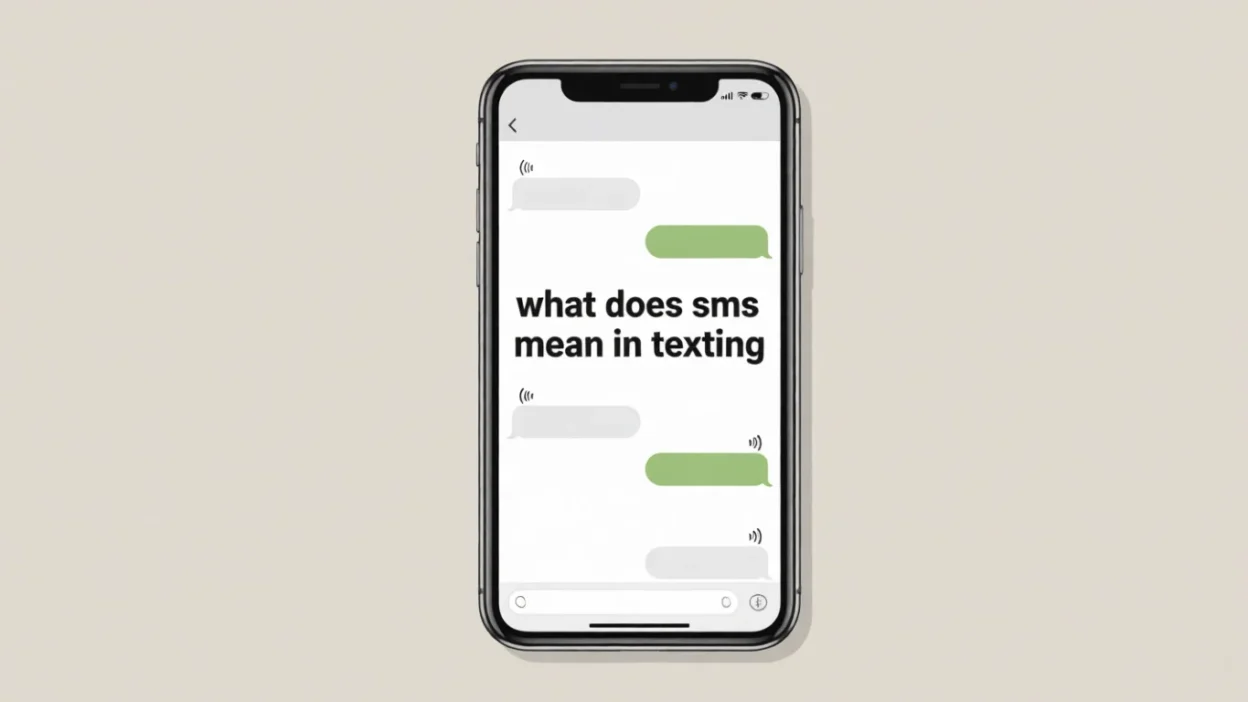
If you’ve ever wondered what does sms mean in texting, you’re not alone. A lot of people use the word without fully knowing what it stands for or how it fits into modern texting culture.
Let’s break it down in clear, simple language—no tech talk, no confusion.
Quick Answer
SMS means “Short Message Service,” and in texting, it refers to sending regular text messages using your phone’s cellular network.
What Does SMS Mean in Texting?
Full form
SMS = Short Message Service
Plain-English explanation
SMS is the original form of texting. It’s the standard way phones send text messages without using the internet. When you send a regular text message (not iMessage or WhatsApp), you’re usually sending an SMS.
It works through your mobile network and has a character limit, which is why early texts were short.
Why people use the term “sms”
- it’s the technical name for texting
- it’s used in phone settings and apps
- it works without internet
- it’s supported by all phones
Short example sentence
➡️ One-line summary: SMS means Short Message Service, the standard way phones send text messages without the internet.
Where Is “SMS” Commonly Used?
Unlike slang, sms is a technical term—but it still shows up in everyday digital conversations.
Common places you’ll see it
- phone settings
- message apps
- bank alerts
- two-factor codes
- customer support messages
- texts and online chats
- social media comments (sometimes)
Tone of “sms”
- neutral
- slightly formal
- technical, not slangy
It’s not casual like “txt,” but it’s still widely understood.
SMS vs Modern Messaging Apps
This is where most confusion comes from.
SMS is different from:
- iMessage
- Messenger
- Instagram DMs
Those apps use the internet. SMS does not.
Key differences
- SMS works without Wi-Fi
- SMS works on any phone
- SMS has limits (like character count)
- SMS may cost money depending on your plan
That’s why it’s still used for important messages.
Realistic Conversation Examples (Modern Chat Style)
Here’s how sms shows up naturally in chats 👇
(all lowercase, modern texting style)
- “can you send it by sms? my data’s off”
- “i didn’t get the code, can you resend the sms?”
- “they sent me an sms confirmation”
- “just text me, sms is fine”
- “check your phone, i sent an sms”
- “the bank sends alerts via sms”
- “i prefer sms over apps sometimes”
- “my phone only gets sms right now”
- “you’ll get the link by sms”
When to Use and When Not to Use “SMS”
✅ When to use “sms”
- talking about regular text messages
- explaining message delivery
- customer support or tech help
- security codes and alerts
- when internet isn’t available
❌ When not to use “sms”
- casual slang conversations
- joking or playful chats
- social media captions
- informal storytelling
Comparison table
| Context | Example Phrase | Why It Works / Doesn’t |
|---|---|---|
| phone support | “you’ll get an sms code” | ✅ clear |
| texting a friend | “send me an sms” | ✅ fine |
| instagram caption | “sent an sms lol” | ❌ sounds odd |
| casual joke | “that was so sms” | ❌ incorrect |
| banking alert | “sms notification sent” | ✅ correct |
Is SMS the Same as Texting?
Short answer: mostly, yes.
In everyday language:
- texting = sending messages
- sms = the technical system behind basic texts
So when someone says “text me,” they usually mean SMS—unless they specify an app.
Similar Terms and Alternatives to “SMS”
Here are related words people often mix up with SMS.
| Term | Meaning | When to Use |
|---|---|---|
| text | casual word for sms | everyday use |
| txt | slang for text | informal chats |
| mms | picture or media message | photos and videos |
| imessage | apple messaging service | iphone users |
| dm | direct message | social media |
| message | general term | neutral use |
Each term fits a slightly different situation.
Common Misunderstandings About SMS
Let’s clear up a few myths.
- ❌ SMS does NOT require internet
- ❌ SMS is NOT outdated
- ❌ SMS is NOT the same as WhatsApp
It’s still widely used, especially for:
- security
- verification
- official messages
FAQs About “What Does SMS Mean in Texting”
1. What does sms mean in texting?
It means Short Message Service, the standard way phones send texts.
2. Is sms different from texting?
Technically yes, but people use the words interchangeably.
3. Does sms use the internet?
No, it uses your cellular network.
4. Is sms still used today?
Yes, especially for alerts and verification codes.
5. Is sms free?
It depends on your mobile plan.
6. Can smartphones send sms?
Yes, all smartphones support sms.
7. Why do companies prefer sms?
Because it works on all phones and doesn’t need internet.
SMS in Modern Texting Culture
Even with so many messaging apps, sms still matters.
It’s reliable.
It’s universal.
And it works when everything else doesn’t.
That’s why banks, apps, and services still depend on SMS—and why the term keeps showing up in online conversations.
Understanding what does sms mean in texting helps you navigate modern communication with confidence, whether you’re chatting casually or handling important messages.
Final Thought
So, what does sms mean in texting?
It stands for Short Message Service, the basic system that allows phones to send text messages without internet access. While newer apps are popular, SMS remains a core part of digital communication.
Knowing the difference helps you understand your phone better—and avoid confusion when the term pops up in chats, settings, or online discussions.

Sara Taylor is a content writer at Whygenix.com, creating clear, engaging articles that simplify complex ideas, helping readers understand the why behind topics in education, lifestyle, and personal development.