The first time I saw someone ask “what does syphilis look like” in a comment thread, it stopped me. The question popped up under a health video, then again in a DM screenshot shared on social media.
It felt awkward—but also very real. A lot of people hear the word syphilis in chats, memes, or online conversations and suddenly realize they don’t actually know what it looks like or how it shows up. If that’s you, you’re not alone.
This guide explains the signs in plain language, without judgment, so you can understand what people mean when they ask—and why it matters.
Quick Answer:
Syphilis can look like painless sores, skin rashes, or flu-like symptoms, depending on the stage of the infection.
What Does Syphilis Look Like?
Syphilis is a sexually transmitted infection (STI) caused by bacteria called Treponema pallidum. It doesn’t have just one look. Instead, it changes over time if it’s not treated.
Plain-English Explanation
Syphilis usually shows up in stages, and each stage can look different. Some signs are easy to miss because they don’t hurt or feel serious at first.
Why People Ask About It
- Symptoms can be confusing or mild
- Early signs often disappear on their own
- People want to compare what they’re seeing
- Online searches feel safer than asking out loud
Short Example Sentence
“i googled what does syphilis look like because i noticed a weird sore.”
Bold Summary:
Syphilis doesn’t look the same for everyone—it changes by stage and can be easy to miss early on.
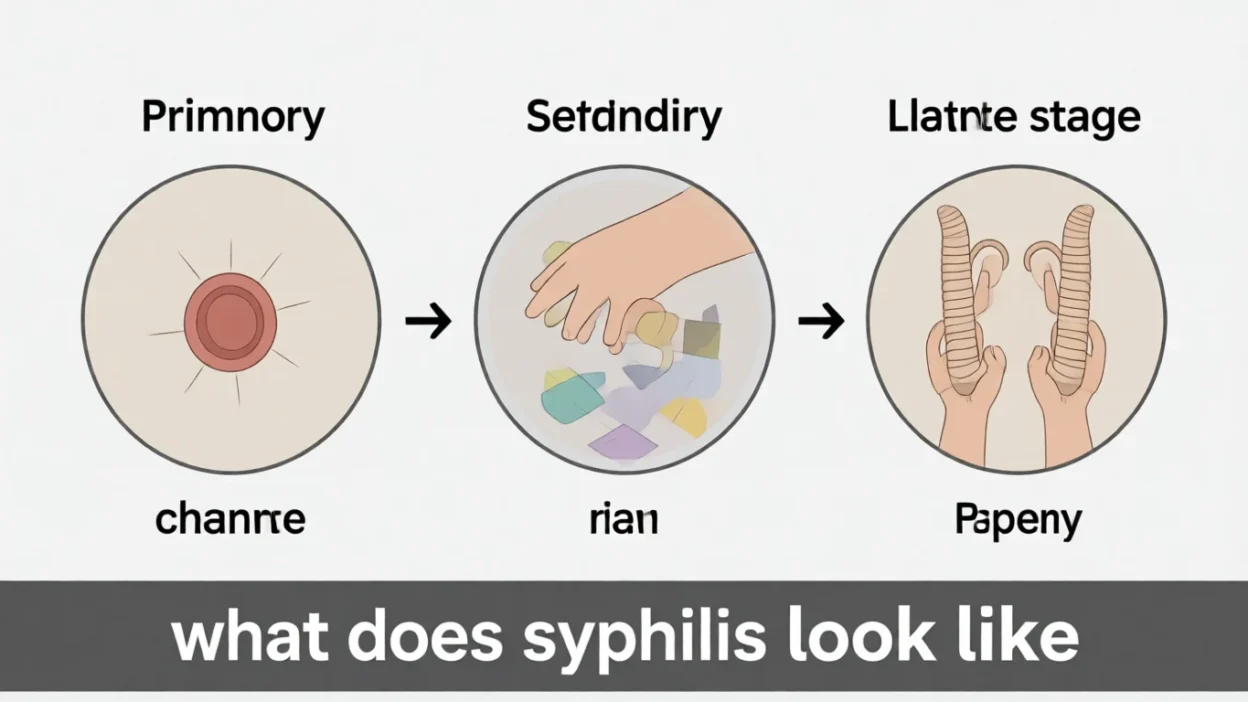
What Syphilis Looks Like by Stage
Understanding the stages helps make sense of the different symptoms people talk about online.
1. Primary Stage (Early)
This is often the first visible sign.
- A small, round, painless sore (called a chancre)
- Usually appears on genitals, mouth, or anus
- Can look like a harmless cut or pimple
- Heals on its own in a few weeks
Because it doesn’t hurt, many people ignore it.
2. Secondary Stage
If untreated, symptoms can spread.
- Skin rash, often on palms or soles
- Flat, red, or brown spots
- Fever, tiredness, sore throat
- Swollen lymph nodes
The rash doesn’t always itch, which surprises people.
3. Latent Stage
This stage is hidden.
- No visible symptoms
- Infection is still in the body
- Can last for years
People often think the problem is gone—but it’s not.
4. Tertiary Stage (Late)
This is rare today but serious.
- Damage to heart, brain, or nerves
- Vision problems
- Memory issues
This stage happens years later if untreated.
Where Is the Term Commonly Used Online?
You’ll see the phrase “what does syphilis look like” used mostly in health-related conversations.
Common Places
- google searches
- reddit health forums
- tiktok or youtube comments
- private dms asking for advice
- anonymous question apps
Tone and Style
- Tone: serious, concerned
- Style: neutral to informal
- Not casual slang: this is a health term
People usually ask quietly or anonymously, not jokingly.
Realistic Conversation Examples
Here are examples of how people actually talk about it online (lowercase, modern style):
- “does syphilis always start with a sore?”
- “what does syphilis look like in early stages?”
- “i saw a rash and now i’m freaking out”
- “is it normal that the sore doesn’t hurt?”
- “google says palms rash could be syphilis??”
- “anyone else had symptoms disappear?”
- “should i get tested just to be safe”
- “health class never explained this stuff clearly”
These chats usually come from concern—not curiosity.
When to Use and When Not to Use This Term
✅ When to Use It
- researching health symptoms
- asking a doctor or clinic
- serious health discussions
- educational conversations
❌ When Not to Use It
- jokes or memes
- casual group chats
- teasing or shaming others
- making assumptions about someone
Comparison Table
| context | example phrase | why it works / doesn’t |
|---|---|---|
| health forum | “what does syphilis look like early on?” | appropriate |
| doctor visit | “i noticed a painless sore” | helpful |
| joke chat | “bro that looks like syphilis” | harmful |
| social post | “guess who has syphilis lol” | offensive |
Similar Terms or Alternatives
People sometimes use related health terms when they’re unsure.
STI / STD
- Meaning: general term for infections spread through sex
- Use when: you don’t know the exact cause
Rash or Sore
- Meaning: symptom, not diagnosis
- Use when: describing what you see
Chancre
- Meaning: medical name for syphilis sore
- Use when: talking to a healthcare provider
| term | meaning | when to use |
|---|---|---|
| syphilis | specific infection | diagnosis |
| sti/std | general category | uncertainty |
| rash | symptom | describing |
| chancre | medical term | clinical talk |
FAQs About Syphilis Appearance
1. Does syphilis always hurt?
No. Early sores are often painless, which makes them easy to ignore.
2. Can syphilis go away on its own?
Symptoms may fade, but the infection stays without treatment.
3. Does everyone get a rash?
No. Some people never notice a rash at all.
4. Can syphilis look like acne or cuts?
Yes. Early sores can look harmless.
5. Is it okay to search symptoms online?
Yes—but online info can’t replace testing.
6. Who should get tested?
Anyone with symptoms, a new partner, or possible exposure.
7. Is syphilis treatable?
Yes. Antibiotics can cure it when caught early.
Final Thought
So, what does syphilis look like?
It can look like a small painless sore, a rash, or sometimes nothing at all—and that’s why people ask about it online. Understanding the signs helps reduce fear, shame, and confusion.
If something feels off, the safest move isn’t guessing—it’s getting tested and talking to a professional. Knowledge makes these conversations clearer and a lot less scary.

Sara Taylor is a content writer at Whygenix.com, creating clear, engaging articles that simplify complex ideas, helping readers understand the why behind topics in education, lifestyle, and personal development.