It usually starts with a simple moment. You’re scrolling through Facebook, reading comments on a news post, or chatting in a family WhatsApp group. Someone mentions a funeral, and then a question pops up: “what does the bible say about cremation?”
Suddenly, everyone has an opinion. Some say cremation is wrong. Others say it doesn’t matter. You might feel confused, especially if you want to respect faith and modern choices.
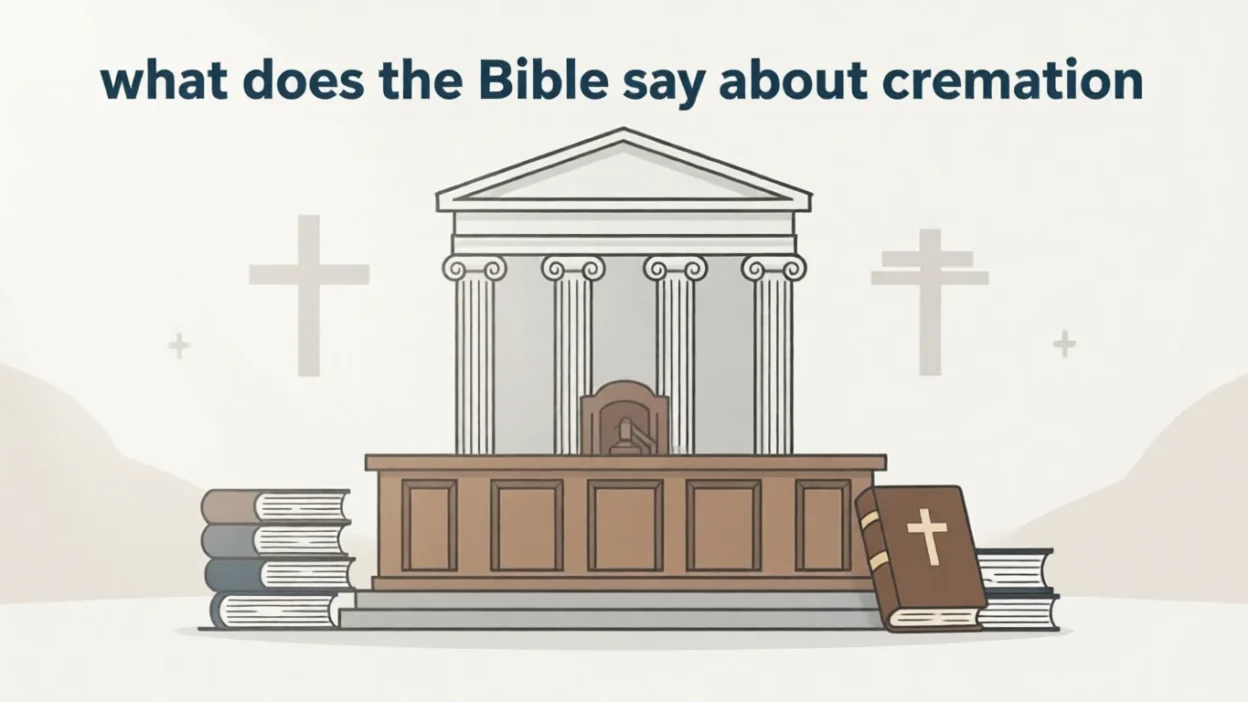
This question is common today because cremation is more popular than ever, and many Christians want clear, Bible-based guidance—not fear or rumors. Let’s talk about it simply, honestly, and with kindness.
Quick Answer
The Bible does not clearly forbid cremation and does not say it is a sin, but it emphasizes honoring God and respecting the body.
What Does “What Does the Bible Say About Cremation” Mean?
Full Meaning (Plain English)
The phrase “what does the bible say about cremation” is not slang or an abbreviation. It’s a faith-based question people ask when they want to know if cremation agrees with biblical teaching.
Simple Explanation
People are asking whether burning a body after death goes against God’s Word. They want to know:
- Is cremation allowed?
- Is burial better?
- Does cremation affect resurrection?
The Bible talks about death, burial, fire, and resurrection—but it never directly commands or forbids cremation.
Why People Ask This Question
People ask this because:
- cremation is common today
- families want to honor loved ones
- faith and tradition matter
- social media spreads mixed opinions
Short Example Sentence
Bold Summary: The phrase asks whether cremation is acceptable according to biblical teaching, and the Bible does not directly condemn it.
Where Is This Question Commonly Used?
You’ll often see or hear “what does the bible say about cremation” in thoughtful, serious discussions.
Common Places
- Facebook and Instagram comments
- YouTube sermon discussions
- Christian forums and Reddit
- Family group chats
- Church study groups
- DMs asking for spiritual advice
Tone of the Phrase
The tone is usually:
- neutral
- respectful
- sometimes emotional or serious
- not casual slang
This question is often asked with sincerity, not argument.
What Does the Bible Actually Say About Cremation?
Burial Was More Common in the Bible
In the Bible, most people were buried, not cremated. Examples include:
- Abraham (Genesis 25:9)
- Sarah
- Moses
- Jesus Himself
Burial was part of the culture at that time.
Cremation in the Bible
Cremation is mentioned only a few times, often connected to:
- judgment
- punishment
- war or tragedy
For example:
- Joshua 7:25 – Achan was burned after severe sin
- Amos 2:1 – Burning bones is condemned as disrespect
But these verses do not say cremation itself is sinful. They describe specific events, not commands.
Resurrection Is God’s Power, Not the Body’s Condition
The Bible clearly teaches resurrection:
- God can raise bodies from dust (Genesis 3:19)
- God created humans from nothing
- God can resurrect cremated, buried, or lost bodies
Many believers point to this truth as reassurance.
Realistic Conversation Examples (Modern Chat Style)
Here’s how people naturally talk about this topic online:
- “does anyone know what the bible says about cremation?”
- “my pastor said it’s not a sin”
- “we chose cremation but prayed about it first”
- “some churches still prefer burial”
- “god can resurrect anyone, cremated or not”
- “this topic always starts debates online”
- “the bible doesn’t directly forbid it”
- “faith matters more than the method”
- “tradition vs modern times, i guess”
When to Use and When Not to Use This Question
✅ When to Use It
- when discussing faith respectfully
- during family or church conversations
- when seeking biblical understanding
- in educational or spiritual spaces
❌ When Not to Use It
- to shame others
- during emotional grieving moments
- in arguments meant to attack beliefs
- without sensitivity
Comparison Table
| Context | Example Phrase | Why It Works / Doesn’t |
|---|---|---|
| church study | “what does the bible say about cremation?” | respectful learning |
| family chat | “is cremation biblical?” | honest curiosity |
| online debate | “cremation is unbiblical” | too harsh |
| funeral moment | “was cremation wrong?” | insensitive timing |
| faith forum | “bible verses on cremation?” | appropriate |
Related Terms and Alternatives
Here are related phrases people use instead of the main keyword:
| Term | Meaning | When Used |
|---|---|---|
| burial vs cremation | comparing methods | discussions |
| christian view on cremation | faith-based opinion | blogs, sermons |
| is cremation a sin | moral concern | online searches |
| bible teaching on death | broader topic | study groups |
| resurrection of the body | core belief | theology talks |
These terms help expand understanding without changing the main question.
FAQ: Common Questions About Cremation and the Bible
1. Does the Bible forbid cremation?
No. The Bible does not directly forbid cremation or call it a sin.
2. Is burial more biblical than cremation?
Burial was more common in biblical times, but culture—not command—shaped that practice.
3. Can cremated bodies be resurrected?
Yes. Christians believe God can resurrect anyone, regardless of how the body was handled.
4. Why do some churches oppose cremation?
Some churches value tradition, symbolism, and respect for the body—but views vary.
5. Is cremation disrespectful according to the Bible?
Not if done with reverence and faith. Intention matters more than method.
6. What matters most in Christianity after death?
Faith in God, salvation, and honoring Him—not the physical process after death.
Final Thought
So, what does the Bible say about cremation? It doesn’t give a strict yes or no. Instead, it points believers toward faith, respect, and trust in God’s power.
Cremation is a modern choice, but God’s ability to resurrect and redeem is eternal.
In today’s digital world, where faith questions spread quickly online, understanding the Bible with balance and compassion matters more than ever.

Sara Taylor is a content writer at Whygenix.com, creating clear, engaging articles that simplify complex ideas, helping readers understand the why behind topics in education, lifestyle, and personal development.