The first time I really noticed the word constitution wasn’t in a history book. It popped up in a group chat after someone shared a news post and asked, “wait, doesn’t the constitution stop this?”
Suddenly, everyone had opinions, but no one explained it clearly. I realized many of us hear the word constitution all the time—on social media, in comments, in debates—but don’t fully understand what it actually does.
If you’ve ever nodded along while secretly feeling confused, you’re not alone. Let’s break it down in simple words that actually make sense.
Quick Answer
The constitution sets the basic rules for how a country is run and protects people’s rights and freedoms.
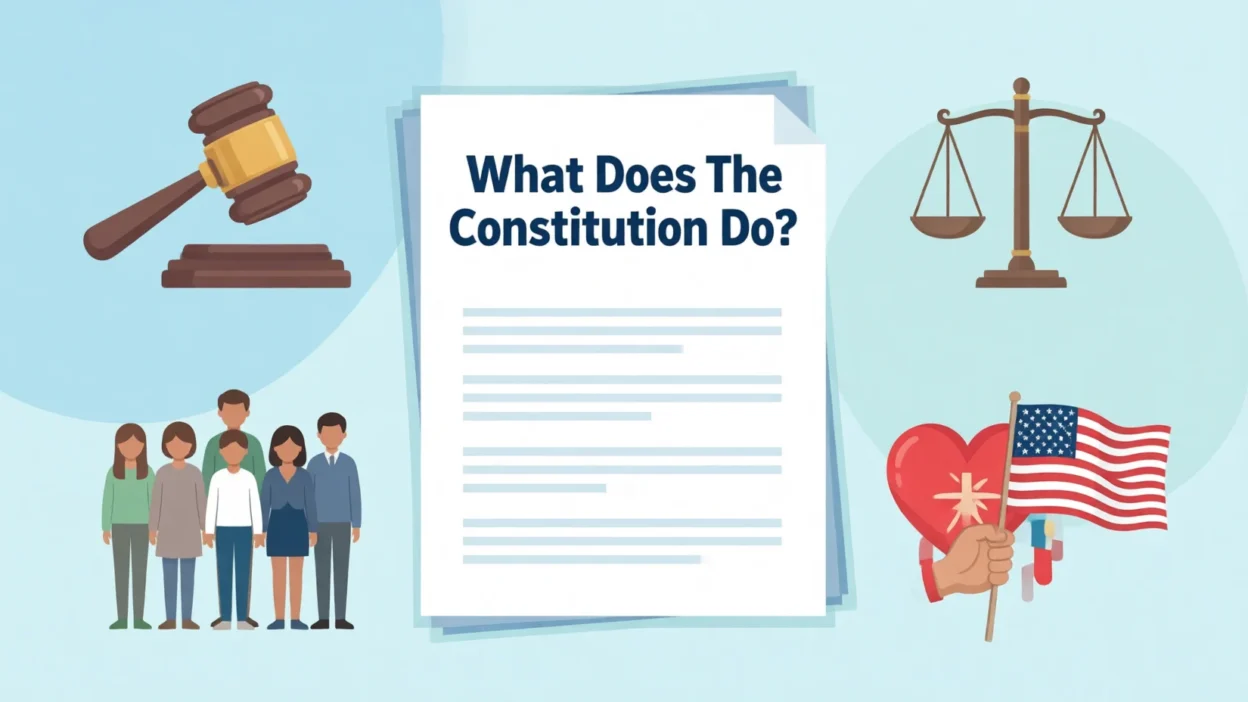
What Does the Constitution Do?
Is There a Full Form of Constitution?
The word constitution does not have a full form. It’s not an abbreviation.
Plain-English Explanation
The constitution is like a rulebook for a country. It explains how the government works, what powers leaders have, and what rights people are guaranteed. It tells everyone—leaders and citizens—what they can and cannot do.
Without a constitution, there would be confusion, unfair rules, and too much power in one place.
Why People Talk About the Constitution So Much
People mention the constitution because it:
- protects basic rights
- limits government power
- guides laws and courts
- affects daily life
- comes up in politics and news
Short Example Sentence
“the constitution protects freedom of speech.”
Bold summary: The constitution explains how a country works and protects people’s basic rights.
What Does the Constitution Do in Simple Terms?
Let’s make this super clear.
1. Sets the Rules for Government
The constitution explains:
- who makes laws
- who enforces laws
- who interprets laws
This helps keep things fair and balanced.
2. Protects People’s Rights
It protects freedoms like:
- speech
- religion
- privacy
- equality
These rights can’t be easily taken away.
3. Limits Power
No single person or group can have unlimited power. The constitution puts limits in place.
4. Creates Stability
It helps keep the country stable, even when leaders change.
Where Is the Term Constitution Commonly Used?
The word constitution is used in many places online and offline.
Common Places You’ll See It
- social media posts
- news articles
- comment sections
- political debates
- school lessons
- online forums
- group chats
Tone of the Word
The tone of constitution is usually:
- formal in law and school
- neutral in news
- informal in chats and comments
It fits both serious discussions and casual online talk.
Realistic Conversation Examples Using Constitution
Here are natural, modern chat-style examples written in lowercase.
- “doesn’t the constitution protect that?”
- “i think the constitution already covers this”
- “people keep ignoring the constitution”
- “is that even allowed by the constitution?”
- “the constitution limits government power”
- “we learned about the constitution today”
- “this debate is all about the constitution”
- “the constitution gives us rights”
- “read the constitution before arguing lol”
These examples reflect how people actually talk online.
When to Use and When Not to Use the Term Constitution
✅ When to Use Constitution
- discussing laws or rights
- talking about government
- sharing political opinions
- learning or teaching civics
❌ When Not to Use Constitution
- unrelated casual jokes
- random conversations with no context
- confusing it with laws or policies
Comparison Table
| Context | Example Phrase | Why It Works or Doesn’t |
|---|---|---|
| political chat | “the constitution protects this” | correct |
| school work | “constitution basics” | appropriate |
| random joke | “that’s unconstitutional pizza” | confusing |
| news comment | “check the constitution” | works |
Constitution vs Laws: What’s the Difference?
Many people mix these up.
| Term | Meaning | When Used |
|---|---|---|
| constitution | highest rulebook | rights, structure |
| laws | rules made by government | daily regulations |
| policies | plans or actions | specific goals |
| amendments | changes to constitution | updates |
The constitution is above all other laws.
Is the Constitution Slang or Texting Language?
No, constitution is not slang.
However, it’s commonly used in:
- online debates
- comment sections
- social media discussions
It has become part of everyday digital conversations.
Similar Words or Alternatives
Depending on context, people may use related terms.
| Term | Meaning | When to Use |
|---|---|---|
| basic law | core rules | simple explanation |
| founding document | original guide | history talk |
| supreme law | highest authority | legal context |
| national charter | country rules | formal writing |
In casual chat, most people just say constitution.
Why the Constitution Matters in Daily Life
Even if you don’t think about it daily, the constitution affects:
- what you can say online
- how you practice beliefs
- how leaders are chosen
- how laws are made
Understanding what does the constitution do helps you understand your rights.
Common Misunderstandings About the Constitution
Some people think:
- it changes easily
- it only matters to politicians
- it applies only in courts
In reality:
- it’s hard to change
- it affects everyone
- it guides everyday laws
FAQ: Common Questions About the Constitution
1. What does the constitution do in simple words?
It sets rules for government and protects people’s rights.
2. Is the constitution the same in every country?
No, each country has its own constitution.
3. Can the constitution be changed?
Yes, but only through special processes.
4. Does the constitution apply to everyone?
Yes, it applies to citizens and government.
5. Why is the constitution important today?
It protects freedoms and limits power.
6. Is the constitution discussed on social media?
Yes, especially during political events.
7. Do kids learn about the constitution?
Yes, it’s taught in schools worldwide.
Final Thought
So, what does the constitution do? It acts as the foundation of a country, setting rules, protecting rights, and keeping power balanced.
While it often sounds formal, the constitution plays a real role in everyday life and modern digital conversations. Understanding it helps you engage smarter, speak confidently, and know your rights in a fast-moving online world.

Joy Root is a content writer at Whygenix.com, creating clear, engaging articles that explain complex ideas simply, helping readers understand why topics matter in everyday life and personal growth.