The first time I remember seeing the word URL, it was in a group chat. Someone said, “send the url,” and I just stared at my screen like… isn’t that just a link?
Later, I saw it again on social media, in YouTube descriptions, school assignments, and even gaming chats. Everyone used it like it was obvious, but no one ever explained it.
If you’ve ever seen URL in a text, comment, DM, or online post and wondered what it actually means, you’re definitely not alone. Let’s break it down in the easiest, most human way possible.
Quick Answer
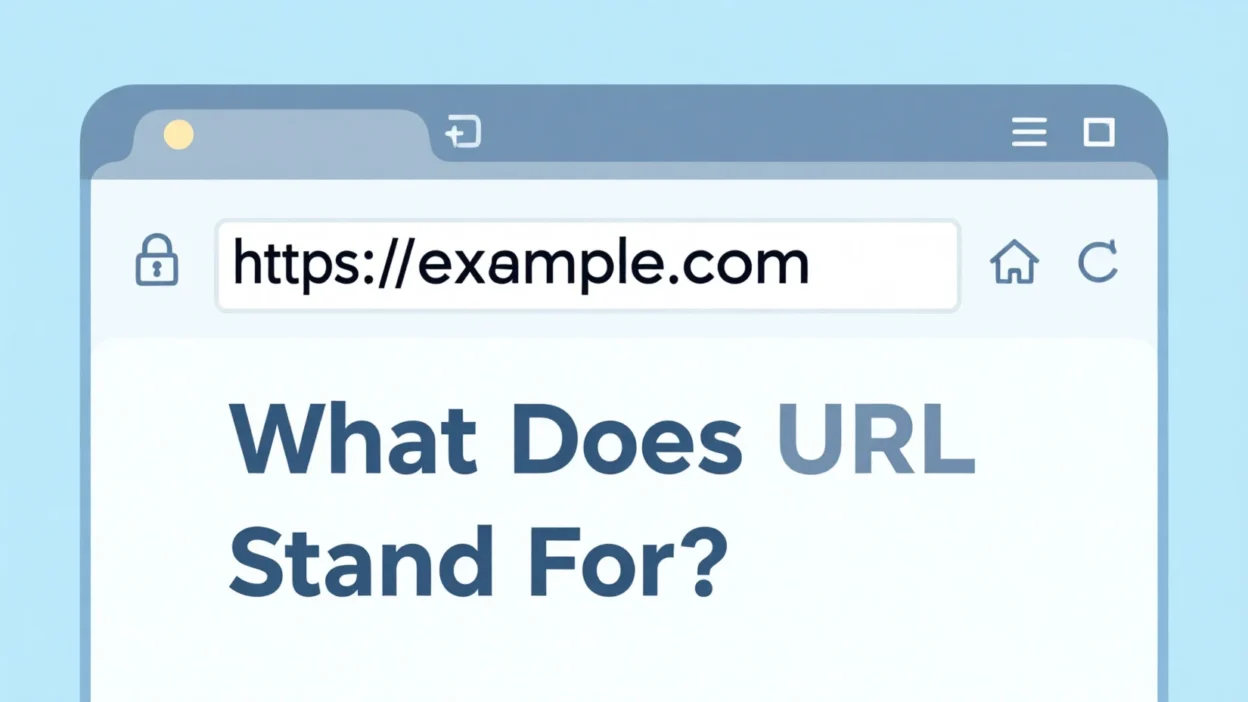
URL stands for Uniform Resource Locator, which is the web address that takes you to a specific page, file, or resource on the internet.
What Does URL Stand For?
Full Form of URL
URL = Uniform Resource Locator
Plain-English Explanation
A URL is simply the address of something on the internet. Just like your home has an address so people can find it, every webpage, video, image, or file online has a URL so browsers know where to go.
When you type a website address into your browser or click a link, you’re using a URL.
Why People Use the Term URL
People use the word URL because:
- it sounds more technical and clear than “link”
- it’s commonly used in tech, school, and work
- it helps explain exactly where something is online
Short Example Sentence
Bold summary: A URL is the exact web address that points to something specific on the internet.
Where Is the Term URL Commonly Used?
The word URL shows up everywhere in digital life.
Common Places You’ll See or Hear URL
- text messages
- social media platforms
- comments and replies
- DMs
- emails
- school assignments
- gaming chats
- online forums
- tech support conversations
Tone of the Word
The tone of URL is mostly:
- neutral
- slightly formal
- sometimes casual in texting
It’s not slang, but it’s very normal in everyday online conversations.
What a URL Actually Looks Like
A URL usually looks something like this:
Each part helps your browser find the right place online. Most people don’t think about the parts—they just click or paste.
Realistic Conversation Examples Using URL
Here are natural, modern texting-style examples written just like real chats, all in lowercase.
- “drop the url here pls”
- “that url isn’t working for me”
- “send the url when you get a sec”
- “i lost the url to the doc”
- “can you paste the url in dm?”
- “the url takes me to the wrong page”
- “is this the correct url?”
- “shorten the url before posting”
- “that url looks kinda sketchy”
These examples show how common and casual the term feels online.
URL vs Link: Are They the Same?
This is a super common question.
- URL is the actual web address
- link is the clickable version of a URL
So technically, they’re different—but in casual conversation, people use them almost the same way.
Example:
- “send the url” = send the link
When to Use and When Not to Use URL
✅ When to Use URL
- when sharing websites or files
- in school or work conversations
- when being clear or technical
- in instructions or tutorials
❌ When Not to Use URL
- in very casual chats where “link” sounds better
- when talking to people unfamiliar with tech terms
- when context already makes it obvious
Comparison Table
| Context | Example Phrase | Why It Works or Doesn’t |
|---|---|---|
| work email | “please share the url” | clear |
| school | “paste the url here” | correct |
| casual chat | “send url lol” | okay |
| non-tech convo | “give me the url” | confusing |
Is URL a Texting Abbreviation or Slang?
No, URL is not slang.
It’s a real, technical term that has become normal in texting culture. Because people spend so much time online, tech words like URL feel casual even though they aren’t slang.
Similar Words and Alternatives to URL
Depending on the situation, people use different words instead of URL.
| Word | Meaning | When to Use |
|---|---|---|
| link | clickable address | casual chats |
| web address | website location | beginners |
| site | website | informal |
| page | specific webpage | casual |
| hyperlink | clickable text link | formal/tech |
| address | internet location | simple talk |
In everyday texting, link is the most common alternative.
URL in Social Media and Online Culture
On social media, URLs are everywhere:
- bios
- captions
- comments
- swipe-up links
- profile links
Example:
People often shorten URLs so they look cleaner and more trustworthy.
Common Misunderstandings About URL
Some people think:
- URL only means websites
- URL is the same as an app
- URL is slang
But in reality:
- URLs can link to files, images, videos, and more
- apps often open URLs behind the scenes
- URL is a real technical term
Why URLs Matter in Daily Life
Understanding what does URL stand for helps you:
- share content correctly
- avoid fake or unsafe links
- follow instructions online
- communicate better in digital spaces
In a world built on the internet, URLs are like digital directions.
FAQ: Common Questions About URL
1. What does URL stand for in simple words?
It stands for Uniform Resource Locator, meaning a web address.
2. Is a URL the same as a link?
Not exactly. A link is clickable, while a URL is the address itself.
3. Can a URL be shortened?
Yes, many tools turn long URLs into short links.
4. Is URL formal or casual?
It’s neutral and works in both formal and casual situations.
5. Do kids and teens use the word URL?
Yes, especially in school, gaming, and social media.
6. Can a URL be unsafe?
Yes. Always be careful with unknown or suspicious URLs.
7. Is URL used worldwide?
Yes, it’s a global internet term.
Final Thought
So, what does URL stand for? It stands for Uniform Resource Locator, which is just a fancy way of saying “the address of something on the internet.”
While it sounds technical, it’s part of everyday digital communication. Whether you’re texting, posting, gaming, or working online, understanding URLs helps you navigate the internet with confidence and clarity.

Bret Lee writes educational and research-based content for Whygenix.com, focused on clarity, accuracy, and explaining why concepts matter through simple, engaging, reader-friendly writing.