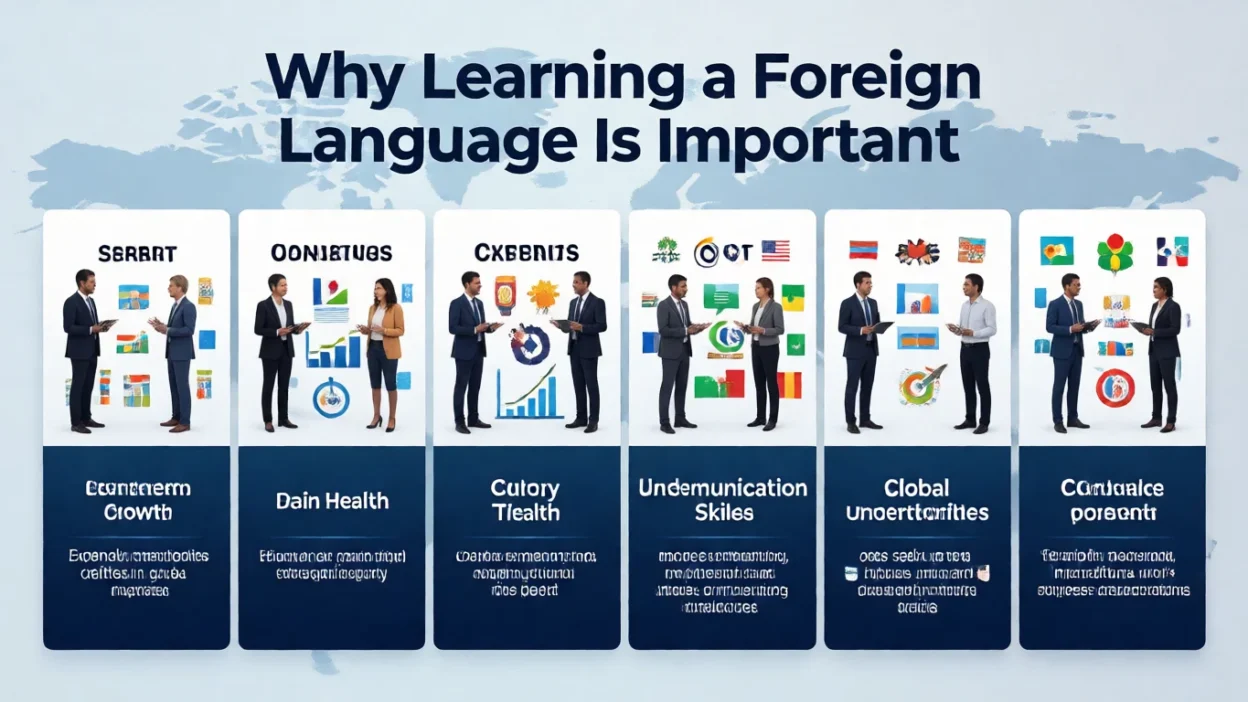
Learning a foreign language is more than memorizing words or mastering grammar. It is a gateway to new cultures, broader perspectives, and deeper human connections.
In an increasingly globalized world, the ability to communicate in more than one language has become a valuable life skill rather than a luxury.
From career advancement to cognitive development, learning a foreign language shapes how people think, communicate, and understand the world.
It enhances empathy, sharpens the mind, and opens doors to opportunities that monolingual individuals may never encounter. Understanding why learning a foreign language is important helps highlight its impact on education, relationships, careers, and personal growth.
Improves Communication Skills
Learning a foreign language strengthens overall communication abilities. It improves listening, speaking, and clarity of expression. These skills transfer to your native language as well.
Expands Career Opportunities
Employers value multilingual employees. Knowing another language increases job prospects and promotions. It is especially useful in international industries.
Enhances Brain Function
Language learning stimulates the brain. It improves memory, focus, and mental flexibility. Cognitive health benefits last a lifetime.
Boosts Cultural Understanding
Learning a new language introduces cultural values and traditions. It helps people understand different lifestyles. Cultural awareness reduces misunderstandings.
Builds Confidence
Speaking another language boosts self-esteem. Confidence grows with communication success. Fear of speaking decreases over time.
Improves Academic Performance
Students learning foreign languages often perform better academically. It enhances reading and comprehension skills. Learning ability improves overall.
Encourages Global Awareness
Language learning broadens worldview. It helps understand global issues better. Awareness fosters empathy and tolerance.
Strengthens Memory
Remembering vocabulary and grammar improves memory skills. Mental recall becomes sharper. Brain agility increases.
Enhances Travel Experiences
Knowing a local language improves travel. Communication becomes easier and richer. Cultural immersion deepens.
Improves Problem-Solving Skills
Learning languages develops analytical thinking. Grammar patterns train logical reasoning. Problem-solving becomes more effective.
Increases Social Connections
Language learning helps form new friendships. It connects people across cultures. Social interaction becomes meaningful.
Supports Personal Growth
Learning a new language challenges comfort zones. Growth occurs through effort and practice. Self-discipline improves.
Improves Listening Skills
Language learners become better listeners. Attention to detail increases. Communication accuracy improves.
Encourages Lifelong Learning
Language learning promotes curiosity. It keeps the mind active. Continuous learning becomes a habit.
Strengthens Multitasking Ability
Switching between languages improves multitasking. Mental flexibility increases. Efficiency improves in daily tasks.
Increases Cultural Respect
Learning a language shows respect for other cultures. It builds mutual understanding. Cultural appreciation deepens.
Enhances Creativity
Exposure to new expressions boosts creativity. Thinking patterns expand. Creative problem-solving improves.
Improves Native Language Skills
Understanding grammar rules improves native language use. Vocabulary expands. Writing and speaking become clearer.
Supports Better Decision-Making
Bilingual individuals think more objectively. Emotional bias reduces. Decisions become more rational.
Builds Patience and Persistence
Language learning requires practice and consistency. Patience develops naturally. Persistence strengthens character.
Increases Global Mobility
Language skills enable international study or work. Global opportunities become accessible. Mobility increases.
Strengthens Cultural Identity
Learning languages deepens appreciation of one’s own culture. Identity becomes more defined. Perspective broadens.
Improves Emotional Intelligence
Understanding another language improves empathy. Emotional awareness increases. Relationships improve.
Supports Mental Health
Language learning keeps the brain active. It reduces cognitive decline risk. Mental health improves long-term.
Creates Competitive Advantage
Multilingual individuals stand out professionally. Skills are highly valued. Competitive edge increases.
Encourages Open-Mindedness
Learning languages challenges stereotypes. Open-minded thinking develops. Acceptance increases.
Summary Table: Why Learning a Foreign Language Matters
| Area | Importance | Example |
|---|---|---|
| Career | Better opportunities | International jobs |
| Brain Health | Cognitive strength | Memory improvement |
| Culture | Global understanding | Cultural respect |
| Education | Academic success | Better learning skills |
| Personal Growth | Confidence | Self-development |
Idioms Related to Language and Communication
| Idiom | Meaning | Example |
|---|---|---|
| Break the ice | Start conversation | Language helps |
| Speak volumes | Express clearly | Actions speak |
| Lost in translation | Misunderstanding | Language gap |
| On the same page | Agreement | Clear communication |
| Word of mouth | Shared information | Language spreads |
Real-Life Examples of Language Learning Importance
• Professionals working in multinational companies
• Students studying abroad
• Travelers communicating locally
• Immigrants integrating into society
• Diplomats and international workers
FAQs
Q1: Why is learning a foreign language important today?
It improves communication, career growth, and cultural understanding.
Q2: Does learning a language improve brain health?
Yes, it strengthens memory and cognitive skills.
Q3: Is language learning difficult?
It requires practice but becomes easier over time.
Q4: Can learning a language help careers?
Yes, multilingual skills increase employability.
Q5: What is the best age to learn a language?
Any age can learn successfully.
Final Thought
Learning a foreign language is one of the most rewarding investments a person can make. It strengthens the mind, enriches personal experiences, and builds bridges between cultures.
Beyond practical benefits, language learning nurtures empathy, confidence, and lifelong curiosity. In a world that thrives on connection and understanding, knowing another language is not just a skill, but a powerful tool for growth, unity, and opportunity.

Bret Lee writes educational and research-based content for Whygenix.com, focused on clarity, accuracy, and explaining why concepts matter through simple, engaging, reader-friendly writing.