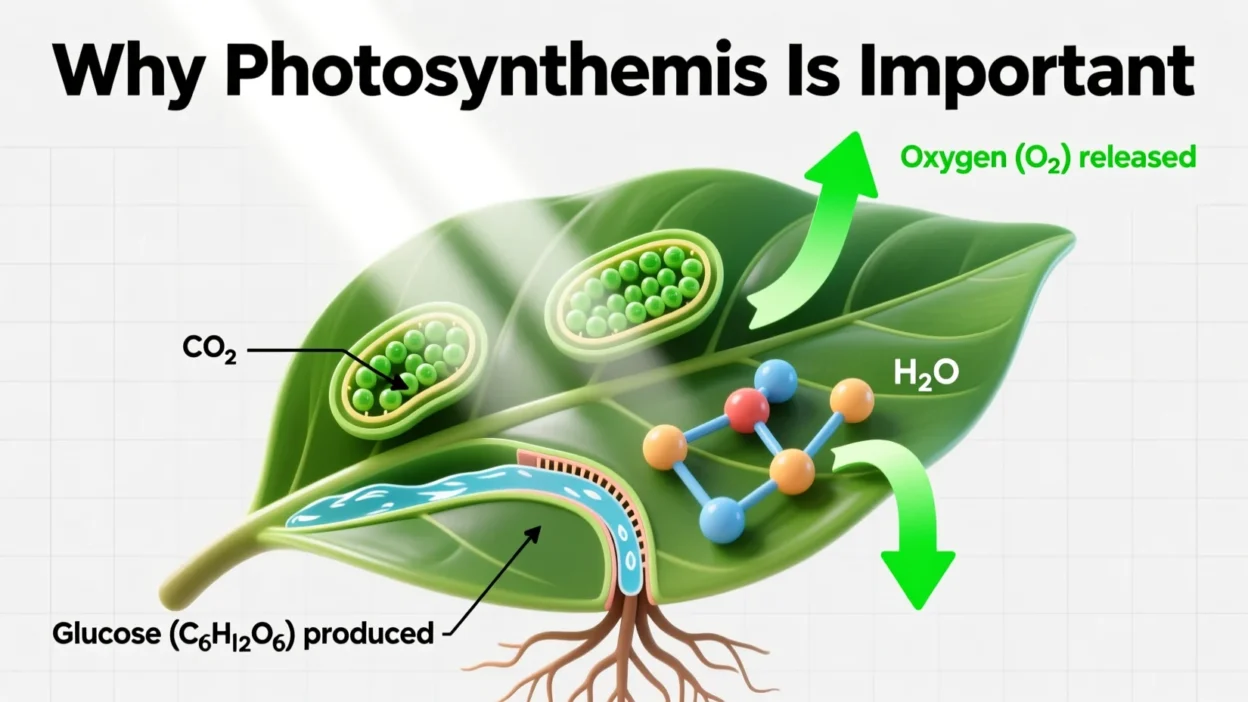
Photosynthesis is one of the most important natural processes on Earth. It is the process by which green plants, algae, and some bacteria use sunlight to make food from carbon dioxide and water.
Through this process, plants produce glucose for energy and release oxygen into the atmosphere, making life possible for nearly all living organisms.
Without photosynthesis, life as we know it would not exist. It forms the foundation of food chains, supports ecosystems, and maintains the balance of gases in the atmosphere.
Photosynthesis also plays a vital role in climate regulation and environmental sustainability. Below are 25 key reasons why photosynthesis is important for life on Earth.
Produces Oxygen for Respiration
Photosynthesis releases oxygen as a byproduct. This oxygen is essential for breathing and survival of humans and animals. Without it, aerobic life could not exist.
Forms the Base of Food Chains
Plants are primary producers. Photosynthesis provides energy that moves through food chains, supporting herbivores and carnivores.
Provides Food for Plants
Through photosynthesis, plants make their own food. This allows them to grow, reproduce, and sustain life.
Supports All Life Forms
Almost every living organism depends on photosynthesis directly or indirectly. It is the foundation of ecosystems.
Maintains Atmospheric Balance
Photosynthesis removes carbon dioxide and adds oxygen to the air. This balance is essential for stable atmospheric conditions.
Helps Control Climate
By absorbing carbon dioxide, photosynthesis helps reduce greenhouse gases. This supports climate regulation and temperature balance.
Supports Plant Growth and Development
Glucose produced in photosynthesis fuels plant growth. It supports flowering, fruiting, and seed production.
Enables Energy Storage
Plants store energy in the form of glucose. This stored energy supports life during periods without sunlight.
Provides Raw Materials
Photosynthesis produces plant biomass. This biomass is used for food, fuel, fibers, and medicines.
Supports Agriculture
Crop production depends on photosynthesis. Healthy photosynthesis ensures food security and agricultural sustainability.
Produces Renewable Energy Sources
Plants store solar energy. This energy is later used as biomass and biofuels.
Maintains Ecosystem Stability
Photosynthesis supports plant populations. Stable plant life supports animals and ecosystems.
Reduces Carbon Dioxide Levels
Photosynthesis lowers atmospheric carbon dioxide. This helps prevent excessive global warming.
Supports Oxygen Cycle
The oxygen produced enters the oxygen cycle. This maintains breathable air for life.
Enables Aquatic Life
Aquatic plants and algae photosynthesize. They support marine food chains and produce oxygen in water bodies.
Supports Biodiversity
Healthy photosynthesis supports diverse plant species. Biodiversity strengthens ecosystems.
Helps Form Fossil Fuels
Ancient photosynthesis led to fossil fuel formation. This stored energy supports modern civilization.
Maintains Soil Health
Plants support soil through roots and organic matter. Healthy soil depends on plant growth from photosynthesis.
Supports Forest Ecosystems
Forests rely on photosynthesis. They regulate climate, water cycles, and wildlife habitats.
Enables Energy Flow in Nature
Photosynthesis converts solar energy into chemical energy. This energy flows through ecosystems.
Supports Human Survival
Food, oxygen, and materials depend on photosynthesis. Human life relies on this process.
Supports Environmental Sustainability
Photosynthesis helps maintain natural balance. It supports sustainable ecosystems.
Maintains Global Oxygen Levels
Constant photosynthesis maintains oxygen levels. This ensures long-term life support.
Supports Life Evolution
Photosynthesis changed Earth’s atmosphere. It allowed complex life to evolve.
Connects Living and Nonliving Systems
Photosynthesis links sunlight, air, water, and living organisms. It connects Earth’s systems.
Summary Table: Why Photosynthesis Matters
| Area | Importance | Example |
|---|---|---|
| Oxygen | Supports breathing | Oxygen release |
| Food | Base of food chains | Plant energy |
| Climate | Reduces CO₂ | Climate control |
| Ecosystems | Supports biodiversity | Forests |
| Energy | Solar energy storage | Biomass |
Idioms Related to Nature and Growth
| Idiom | Meaning | Example |
|---|---|---|
| Lifeline | Essential support | Photosynthesis is a lifeline. |
| Back to nature | Natural processes | Nature sustains life. |
| Grow from the ground up | Natural growth | Ecosystems develop gradually. |
| Green energy | Eco-friendly power | Plants store solar energy. |
| Root of life | Fundamental cause | Photosynthesis supports life. |
Real-Life Examples of Photosynthesis Importance
• Crops producing food for humans
• Forests releasing oxygen
• Algae supporting marine life
• Plants absorbing carbon dioxide
• Ecosystems maintaining balance
FAQs
Q1: Why is photosynthesis important for life?
It produces oxygen and food, supporting all living organisms.
Q2: Can life exist without photosynthesis?
Most life depends on it directly or indirectly.
Q3: Does photosynthesis affect climate?
Yes. It reduces carbon dioxide and helps regulate temperature.
Q4: Why is photosynthesis important for animals?
Animals depend on plant-produced oxygen and food energy.
Q5: How does photosynthesis support ecosystems?
It provides energy, oxygen, and stability to ecosystems.
Final Thought
Photosynthesis is the foundation of life on Earth. It connects sunlight, plants, animals, and humans in a delicate balance that sustains ecosystems and the atmosphere. By producing oxygen, food, and energy, photosynthesis supports survival, growth, and environmental stability.
Protecting plants and ecosystems means protecting the process that makes life possible. Understanding the importance of photosynthesis reminds us how deeply connected all life truly is.

Bret Lee writes educational and research-based content for Whygenix.com, focused on clarity, accuracy, and explaining why concepts matter through simple, engaging, reader-friendly writing.