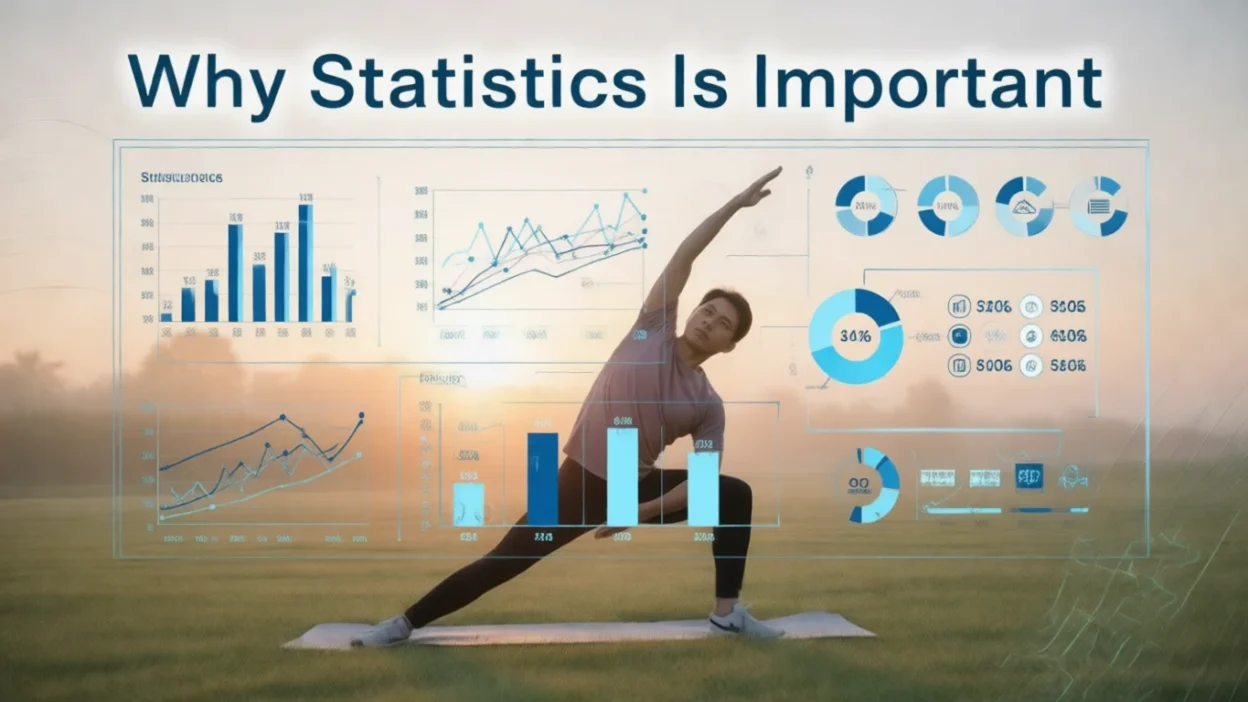
Statistics is one of the most powerful tools used to understand the world. It helps us interpret information, analyze patterns, measure performance, and make decisions based on facts instead of assumptions.
From businesses tracking their progress to governments planning national policies, statistics plays a key role in shaping smarter outcomes. Even in everyday life—whether you’re checking weather forecasts, reviewing product ratings, or managing finances—statistics quietly guides your choices.
Despite its importance, many people underestimate how deeply statistics influences society. It supports research, improves accuracy, and helps us understand uncertainty.
By turning raw numbers into meaningful insights, statistics gives structure to ideas and helps us see the bigger picture. Below are 25 strong reasons that show why statistics is important and how it impacts nearly every field.
Helps Us Make Informed Decisions
Statistics provides reliable data that helps individuals and organizations make smarter choices. Instead of guessing, people can analyze trends, compare options, and choose what works best. This reduces risks and improves outcomes.
Supports Scientific Research
Every scientific study relies on statistics to test hypotheses, analyze results, and validate findings. Without it, research would lack accuracy and credibility, making discoveries unreliable.
Improves Business Planning
Companies use statistics to predict demand, analyze sales, and understand customer behavior. This helps businesses reduce losses, increase profit, and plan strategically for future growth.
Measures Performance Accurately
Statistics helps track performance using measurable indicators. Whether it’s student grades, company revenue, or athlete progress, data-driven measurement ensures fairness and accuracy.
Helps Understand Market Trends
Statistics reveals patterns in consumer behavior and industry changes. It helps businesses respond quickly, stay competitive, and identify new opportunities for growth.
Supports Government Policies
Governments rely on statistics to understand population changes, employment rates, healthcare needs, and economic performance. This ensures policies are effective and well-targeted.
Improves Healthcare Outcomes
Statistics helps analyze medical data, predict disease outbreaks, and measure treatment success. It allows healthcare professionals to make informed, life-saving decisions.
Helps Interpret Big Data
With millions of data points generated daily, statistics provides tools to analyze and interpret large datasets. This leads to more accurate predictions and solutions.
Reduces Uncertainty
Statistics gives structure to uncertain events by showing the probability of outcomes. It helps people prepare for risks instead of being caught off guard.
Enhances Problem-Solving
Using statistical methods, individuals can identify root causes, compare possible solutions, and choose the most effective path forward.
Helps in Quality Control
Industries use statistical techniques to test product quality and reduce defects. This ensures safer, more reliable products reach customers.
Supports Education and Learning
Teachers and researchers use statistics to measure student performance and improve learning strategies. It helps identify areas where improvement is needed.
Improves Financial Planning
Statistics helps people analyze expenses, predict savings, and understand investment risks. It guides smarter financial decisions for individuals and businesses.
Helps Predict Future Trends
From weather forecasts to stock market predictions, statistics plays a major role in forecasting future events. This helps people plan ahead with more confidence.
Strengthens Communication of Facts
Statistics allows information to be presented clearly using graphs, charts, and numbers. This makes complex ideas easier to understand and more persuasive.
Supports Fair Testing and Evaluation
Whether in schools, laboratories, or businesses, statistics ensures tests are fair, unbiased, and consistent. It removes guesswork and focuses on facts.
Helps Monitor Social Issues
Statistics reveals trends in poverty, crime, education, and inequality. Understanding these issues helps societies create effective solutions.
Improves Sports Performance
Coaches and athletes analyze statistical data to measure strengths, weaknesses, and performance patterns. This leads to better training and competitive advantage.
Enhances Risk Management
Insurance companies, investors, and decision-makers use statistics to evaluate risk. This minimizes loss and improves financial stability.
Supports Technology and AI
Artificial intelligence and machine learning depend heavily on statistical models. These models allow systems to learn, predict, and improve over time.
Improves Customer Satisfaction
Businesses collect and analyze customer data to understand preferences and improve products. Statistics ensures these improvements are based on real feedback.
Helps Track Progress Over Time
Statistical analysis shows how performance changes over days, months, or years. This helps individuals and organizations stay on the right track.
Encourages Critical Thinking
Statistics teaches people to question information, analyze sources, and verify claims. This reduces misinformation and supports logical thinking.
Strengthens Academic Research
Almost every academic field—from psychology to economics—relies on statistics to produce reliable research. It ensures findings are meaningful and accurate.
Makes Everyday Life Easier
We use statistics without even noticing—from reading polls and reviews to comparing prices. It simplifies daily choices and helps us make confident decisions.
Summary Table: Why Statistics Matters
| Category | Importance | Example |
|---|---|---|
| Research | Accurate results and conclusions | Medical trials and scientific studies |
| Business | Planning and forecasting | Market trend analysis |
| Government | Policy-making and population study | Census, unemployment rate |
| Daily Life | Smarter decisions | Product ratings, budgeting |
| Technology | AI and big data | Machine learning analytics |
Idioms Related to Numbers & Data
| Idiom | Meaning | Example |
|---|---|---|
| By the numbers | Following a standard method | The coach trained the team strictly by the numbers. |
| Crunch the numbers | Calculate carefully | The manager crunched the numbers before finalizing the deal. |
| Strength in numbers | Power in group unity | The volunteers succeeded because there was strength in numbers. |
| The numbers don’t lie | Facts are honest | The results were clear—the numbers don’t lie. |
| Safety in numbers | Less risk in groups | Hikers stayed together because there was safety in numbers. |
Real-Life Examples of Statistics in Action
• Hospitals predicting patient needs using statistical trends
• Businesses improving marketing strategies by analyzing sales numbers
• Governments planning roads, schools, and hospitals using census data
• Weather departments forecasting storms and rainfall accurately
• Students analyzing research data for university projects
FAQs
Q1: Why do we need statistics in real life?
Because it helps us understand information, evaluate choices, and make better decisions.
Q2: Is statistics important for business?
Yes, it helps in planning, forecasting, customer analysis, and performance measurement.
Q3: How does statistics help in research?
It verifies results, supports conclusions, and ensures accuracy in scientific studies.
Q4: Does statistics reduce uncertainty?
Yes, it helps predict probabilities and prepares us for possible outcomes.
Q5: Is statistics useful for students?
Absolutely. Students use it for projects, research, exams, and everyday problem-solving.
Final Thought
Statistics plays a foundational role in shaping our understanding of the world. It brings clarity to complex information, helps us interpret patterns, and allows meaningful decisions to be made with confidence.
Whether you’re a researcher, a business owner, a student, or simply someone navigating daily life, statistics empowers you to think logically and choose wisely.
In a world overflowing with data, the ability to understand statistics is more important than ever. It gives us the tools to question, analyze, and discover truth—making it one of the most valuable skills of the modern era.

Bret Lee writes educational and research-based content for Whygenix.com, focused on clarity, accuracy, and explaining why concepts matter through simple, engaging, reader-friendly writing.