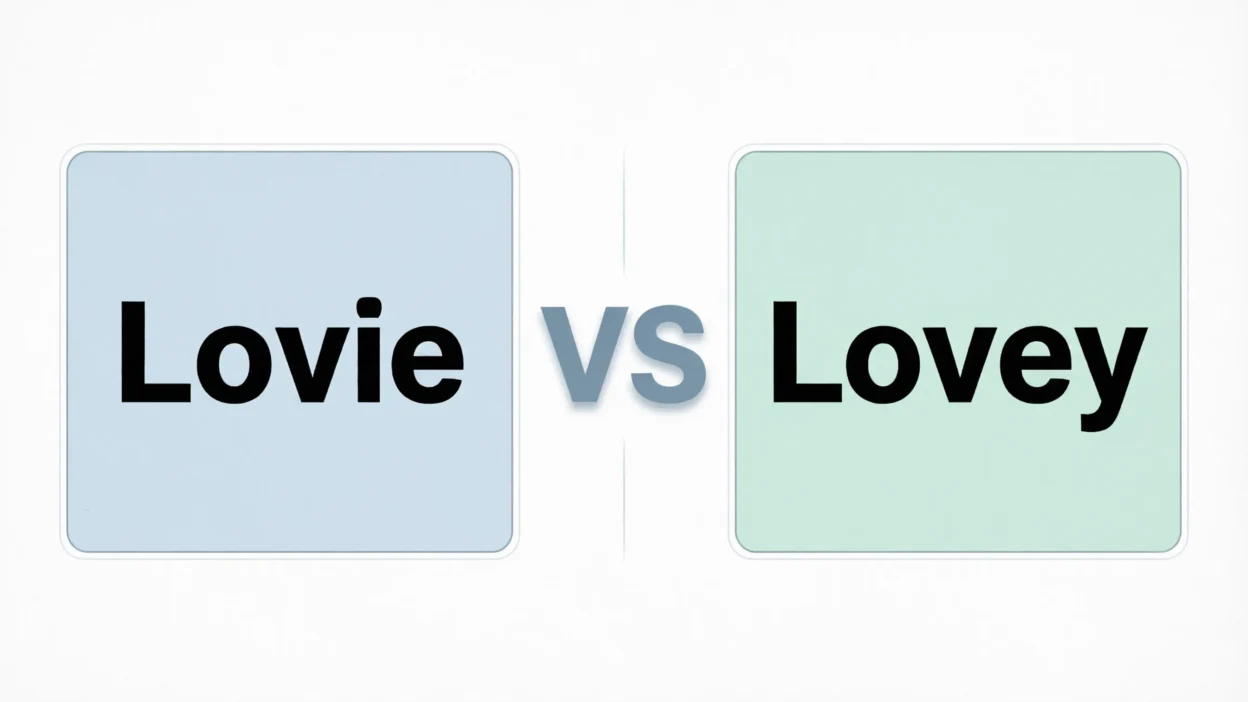
Have you ever seen the words lovie and lovey and wondered if they mean the same thing? These two affectionate words look almost identical, which often causes confusion among writers, parents, couples, and English learners. While both terms are associated with love and affection, they are not always used in the same way.
Understanding the difference between lovie vs lovey can help you communicate more naturally and avoid common spelling mistakes. In this guide, you’ll learn the meaning of each word, when to use them, examples in context, and the key differences that separate them.
Quick Answer
Lovey is the more widely recognized and standard spelling in English. It is commonly used as a term of endearment for a loved one.
Lovie is also used, but it often refers to a child’s comfort object such as a favorite blanket or stuffed animal. In some cases, it can also be an alternative spelling of “lovey.”
If you’re referring to a romantic nickname or affectionate term, lovey is usually the safer choice.
What Does “Lovey” Mean?
The word lovey is an affectionate nickname used to express warmth, care, and fondness toward someone.
It is commonly used between:
- Romantic partners
- Family members
- Close friends
- Parents and children
Examples of Lovey
- Good morning, lovey.
- How are you feeling today, lovey?
- Come here, lovey, and give me a hug.
- My grandmother always called me lovey.
The word carries a gentle, loving tone and is often heard in casual conversations.
What Does “Lovie” Mean?
The word lovie has two common meanings depending on the context.
1. A Child’s Comfort Item
In modern parenting language, a lovie is a small object that provides comfort to a child.
Examples include:
- A favorite blanket
- A stuffed animal
- A soft toy
- A comfort cloth
Examples
- My toddler never sleeps without her lovie.
- We almost lost his favorite lovie during vacation.
- The baby carries her lovie everywhere.
2. Alternative Spelling of Lovey
Some people use lovie as a variant spelling of lovey when addressing someone affectionately.
Examples:
- Thanks for helping me, lovie.
- I miss you, lovie.
However, this spelling is less common in standard written English.
Lovie vs Lovey: Side-by-Side Comparison
| Feature | Lovie | Lovey |
|---|---|---|
| Primary Meaning | Child’s comfort object | Term of endearment |
| Common Usage | Parenting and childcare | Relationships and affection |
| Standard Spelling for Nickname | Less common | More common |
| Used for Blankets or Toys | Yes | Rarely |
| Used for Romantic Partners | Sometimes | Frequently |
| Popular in Parenting Vocabulary | Yes | No |
Which Word Should You Use?
The correct choice depends on your meaning.
Use lovey when:
- Speaking affectionately to someone
- Writing messages to a partner
- Using a nickname
- Referring to a loved one
Use lovie when:
- Talking about a child’s comfort item
- Discussing parenting topics
- Referring to a stuffed animal or security blanket
Examples
✔ She kissed her lovey goodbye before work.
✔ The toddler carried his lovie to daycare.
✔ Thanks for dinner, lovey.
✔ We packed the baby’s lovie in the suitcase.
Common Mistakes People Make
Because the words sound alike, many writers use them interchangeably.
Mistake #1: Using Lovie for Romantic Writing
Incorrect:
- Goodnight, my lovie.
While understandable, many readers expect lovey in this context.
Better:
- Goodnight, my lovey.
Mistake #2: Using Lovey for a Child’s Comfort Toy
Incorrect:
- The baby lost her lovey at daycare.
Although some parents do use this spelling, lovie is often clearer when referring to a comfort object.
Better:
- The baby lost her lovie at daycare.
Mistake #3: Assuming They Always Mean the Same Thing
The meanings overlap occasionally, but context matters.
Why Are These Words Confusing?
English contains many words that share pronunciation but have different spellings or specialized meanings.
Several factors contribute to the confusion:
- Nearly identical pronunciation
- Both connected to affection
- Regional spelling preferences
- Informal usage in everyday speech
- Different meanings depending on context
Because both words come from the idea of love, many people naturally assume they are interchangeable.
American vs British English
American English
In American English:
- Lovie is frequently used in parenting circles to describe a comfort object.
- Lovey is commonly used as an affectionate nickname.
Examples:
- Don’t forget your teddy bear and lovie.
- See you later, lovey.
British English
In British English:
- Lovey is more familiar as a term of affection.
- The parenting meaning exists but may be less common in everyday usage.
British speakers may use affectionate terms such as:
- Love
- Lovely
- Lovey
As a result, lovey tends to be the more recognized spelling in the UK.
Synonyms and Related Terms
If you’re looking for similar affectionate words, consider:
Alternatives to Lovey
- Darling
- Sweetheart
- Honey
- Dear
- Babe
- Love
- Precious
- Angel
Related Terms to Lovie
- Security blanket
- Comfort toy
- Stuffed animal
- Transitional object
- Teddy bear
- Comfort blanket
These related words help clarify the intended meaning in different situations.
Examples in Everyday Conversations
Using Lovey
Partner: Good morning, lovey.
Friend: Thanks, lovey, you’re the best.
Grandparent: Come sit beside me, lovey.
Using Lovie
Parent: Did you pack Emma’s lovie?
Teacher: He brought his lovie for nap time.
Babysitter: She won’t sleep without her lovie.
How to Remember the Difference
A simple memory trick can help.
Lovey = Loved Person
Think of lovey as a loving nickname for a person.
Lovie = Little Comfort Item
Think of lovie as a little object that comforts a child.
This quick association makes it easier to choose the correct word.
FAQs About Lovie vs Lovey
Is lovey a real word?
Yes. Lovey is a recognized English word used as a term of endearment.
Is lovie a real word?
Yes. Lovie is commonly used in parenting contexts to describe a child’s comfort object.
Which spelling is more common?
Lovey is generally more common in everyday writing when referring to a loved person.
Can lovie and lovey mean the same thing?
Sometimes. Some people use lovie as an alternative spelling of lovey, but their most common meanings differ.
Is lovie used in parenting?
Yes. Parents often use lovie to describe a security blanket, stuffed toy, or comfort item.
Can I call my partner lovie?
You can, but lovey is generally the more standard and widely recognized spelling.
Is there a grammar rule for choosing between them?
No strict grammar rule exists. Usage depends on context and intended meaning.
Which word should writers use?
Most writers should use lovey for affectionate nicknames and lovie for children’s comfort objects.
Conclusion
When comparing lovie vs lovey, the biggest difference lies in context. Lovey is primarily a term of endearment used for people, while lovie is commonly associated with a child’s favorite comfort item such as a blanket or stuffed toy. Although some overlap exists, understanding the distinction helps make your writing clearer and more natural.
If you’re talking to a loved one, choose lovey. If you’re discussing a child’s comfort object, choose lovie. Keeping this simple distinction in mind will help you use both words confidently and correctly in everyday English.
Actionable Takeaway
Before using either word, ask yourself one question: Am I referring to a person or an object? If it’s a loved person, use lovey. If it’s a child’s comforting toy or blanket, use lovie. This quick check will help you avoid confusion and choose the right word every time.
Meta Description: Learn the difference between lovie vs lovey, their meanings, examples, common mistakes, and when to use each word correctly.

Joy Root is a content writer at Whygenix.com, creating clear, engaging articles that explain complex ideas simply, helping readers understand why topics matter in everyday life and personal growth.