If you’ve ever typed more then and wondered whether it should actually be more than, you’re not alone. These two phrases are commonly confused because the words then and than sound similar when spoken quickly. However, they have very different meanings and uses in English grammar.
Understanding the difference between more then vs more than is important for clear and professional writing. Whether you’re writing emails, academic papers, blog posts, or social media captions, using the correct phrase can make your writing more accurate and easier to understand. In this guide, you’ll learn the meaning of each phrase, see real-world examples, avoid common mistakes, and discover simple tricks to remember the difference.
Quick Answer
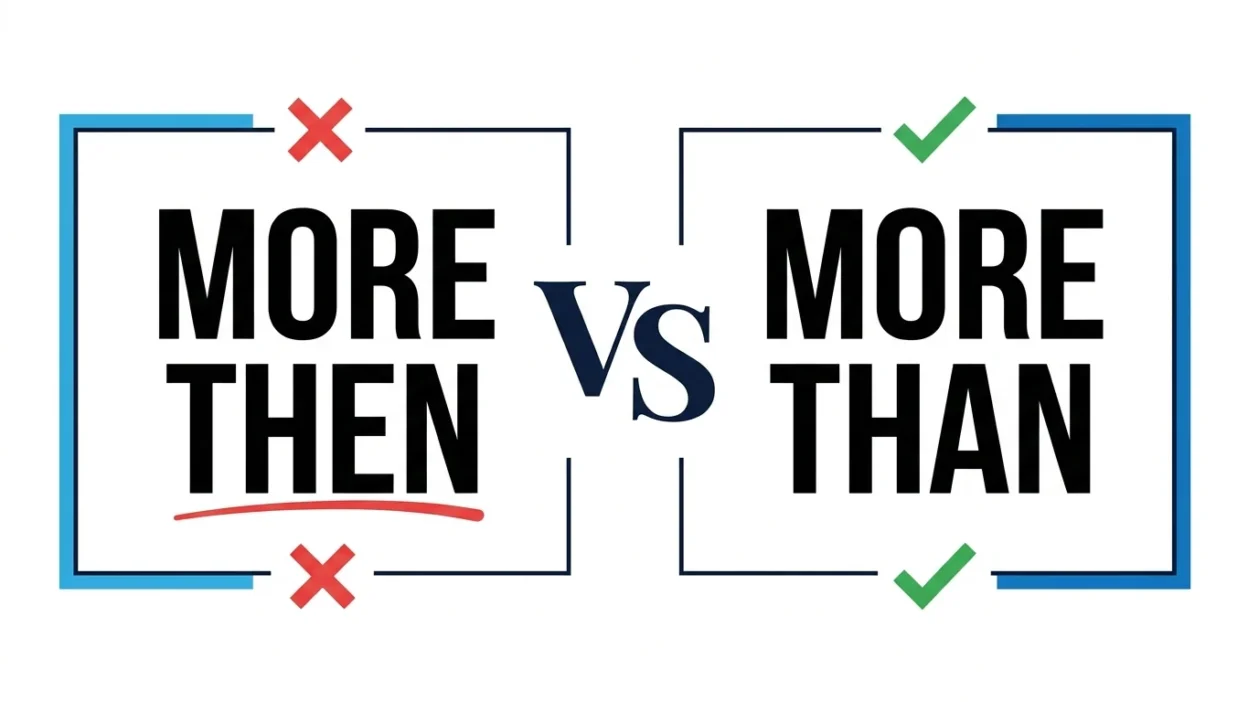
✅ More than is the correct phrase when talking about a greater amount, number, degree, or comparison.
❌ More then is usually incorrect and results from confusing then with than.
Examples
- She has more than 100 books. ✅
- This project is more than a simple assignment. ✅
- She has more then 100 books. ❌
In almost every situation where you’re making a comparison or discussing quantity, more than is the correct choice.
More Then vs More Than: Comparison Table
| Phrase | Correct? | Meaning | Example |
|---|---|---|---|
| More Than | ✅ Yes | Greater in amount, number, or degree | More than 50 people attended. |
| More Then | ❌ Usually No | Grammar mistake in most contexts | More then 50 people attended. |
What Does More Than Mean?
More than is a common English phrase used to indicate:
- A greater quantity
- A higher number
- A larger amount
- A stronger degree
- A comparison
It combines the word more with the comparative conjunction than.
Examples of More Than
- There were more than 200 guests at the wedding.
- She earns more than her brother.
- The movie lasted more than three hours.
- This job requires more than technical skills.
- We received more than expected.
In each example, more than expresses excess, comparison, or a greater amount.
What Does More Then Mean?
In most cases, more then is simply a grammatical error.
The confusion occurs because people accidentally use then instead of than.
Understanding Then
The word then usually refers to:
- Time
- Sequence
- What happens next
Examples:
- Finish your homework, then watch TV.
- We went shopping and then had lunch.
- Back then, things were different.
Because then relates to time rather than comparison, it does not fit in phrases involving quantity or degree.
Why More Than Is Correct
The word than is specifically used for comparisons.
Examples:
- Taller than
- Faster than
- Better than
- More than
When discussing an amount greater than something else, English grammar requires than, not then.
Correct Examples
- More than 10 people attended.
- More than enough food was available.
- She is more experienced than her colleague.
- The result was more than satisfactory.
Incorrect Examples
- More then 10 people attended.
- More then enough food was available.
- She is more experienced then her colleague.
Understanding Then vs Than
One of the easiest ways to avoid mistakes is to understand the individual meanings.
Than
Than is used for comparisons.
Examples:
- Older than
- Bigger than
- Faster than
- More than
Then
Then is used for time or sequence.
Examples:
- Eat dinner, then relax.
- We arrived, then checked in.
- Life was simpler back then.
Side-by-Side Comparison
| Word | Purpose | Example |
|---|---|---|
| Than | Comparison | She is taller than me. |
| Then | Time or sequence | She arrived, then left. |
Examples of More Than in Everyday English
Talking About Numbers
- More than 500 students enrolled.
- More than 1,000 tickets were sold.
- The company employs more than 200 workers.
Talking About Money
- The repair cost more than expected.
- He spends more than he saves.
- The project generated more than a million dollars.
Talking About Feelings
- She is more than happy to help.
- I’m more than grateful for your support.
- They were more than excited about the news.
Talking About Importance
- Success requires more than talent.
- Leadership is more than giving orders.
- Friendship is more than spending time together.
Common Mistakes to Avoid
Mistake #1: Using Then Instead of Than
❌ More then 100 people attended.
✅ More than 100 people attended.
Mistake #2: Confusing Sound with Meaning
Because the words sound similar, writers sometimes choose the wrong one.
Always focus on meaning rather than pronunciation.
Mistake #3: Skipping Proofreading
Many instances of more then are simple typing mistakes.
A quick proofreading check can catch them.
Mistake #4: Assuming Then and Than Are Interchangeable
They are not interchangeable.
- Than = comparison
- Then = time
Understanding this distinction solves most grammar issues.
Memory Trick to Remember the Difference
Here’s an easy trick:
Than = Comparison
Notice that than contains the letter A.
Think:
A = Comparing Amounts
- More than
- Better than
- Faster than
Then = Time
Think of then as referring to “next.”
- First this, then that.
- We ate, then left.
Whenever you’re discussing quantity or comparison, choose than.
Synonyms and Related Phrases
Depending on context, more than can sometimes be replaced with:
- Over
- Above
- Greater than
- Exceeding
- Beyond
- In excess of
Examples
- More than 50 people attended.
- Over 50 people attended.
- More than enough food.
- An abundance of food.
These alternatives can improve writing variety while preserving meaning.
More Than in Formal and Informal Writing
One reason more than is so important is that it appears everywhere.
Academic Writing
- More than half of participants agreed.
Business Writing
- Revenue increased by more than 20%.
Everyday Writing
- I’ve known her for more than ten years.
Marketing Content
- More than one million customers trust our brand.
Because the phrase is so common, mastering it improves writing across many situations.
American vs British English
There is no significant difference between American and British English regarding more than and more then.
Both varieties use:
✅ More than
Both consider:
❌ More then
to be incorrect in comparative contexts.
Whether you’re writing for a US, UK, Canadian, Australian, or international audience, the rule remains the same.
FAQs About More Then vs More Than
Is more then ever correct?
In most cases, no. When discussing quantity or comparison, more than is correct.
Why do people write more then?
Because then and than sound similar, making them easy to confuse.
What does more than mean?
It means a greater amount, number, degree, or level.
Can I use more than in formal writing?
Yes. It is standard English and widely used in academic and professional writing.
Is then ever used for comparison?
No. Then primarily refers to time or sequence.
How do I remember the difference?
Remember that than is for comparisons and then is for time.
Is more than grammatically correct?
Yes. It is the correct phrase when comparing quantities or amounts.
Do British and American English use different rules?
No. Both follow the same grammar rule.
Final Summary
The difference between more then vs more than is simple once you understand the roles of then and than. More than is the correct phrase when discussing a greater quantity, amount, degree, or comparison. It is used in everyday conversation, professional communication, academic writing, and business content.
By contrast, more then is usually a mistake caused by confusing then with than. Since then refers to time and sequence rather than comparison, it does not belong in phrases that describe larger amounts or greater numbers.
Actionable Takeaway
Whenever you write more than, ask yourself:
Am I comparing an amount, number, or degree?
If the answer is yes, use than.
Remember:
- Than = Comparison
- Then = Time
Following this simple rule will help you avoid one of the most common English grammar mistakes and make your writing clearer and more professional.

Bret Lee writes educational and research-based content for Whygenix.com, focused on clarity, accuracy, and explaining why concepts matter through simple, engaging, reader-friendly writing.