Have you ever typed “skiddish” and wondered if it was a real word? You’re not alone. Many English speakers hear the word in conversation and assume it’s spelled skiddish, only to discover that dictionaries tell a different story.
Understanding the difference between skiddish vs skittish can help you avoid a common spelling mistake and improve your writing. Whether you’re describing a nervous horse, a shy pet, or a person who seems uneasy, knowing the correct form matters. This guide explains the meaning, usage, examples, common errors, and everything else you need to know.
Quick Answer
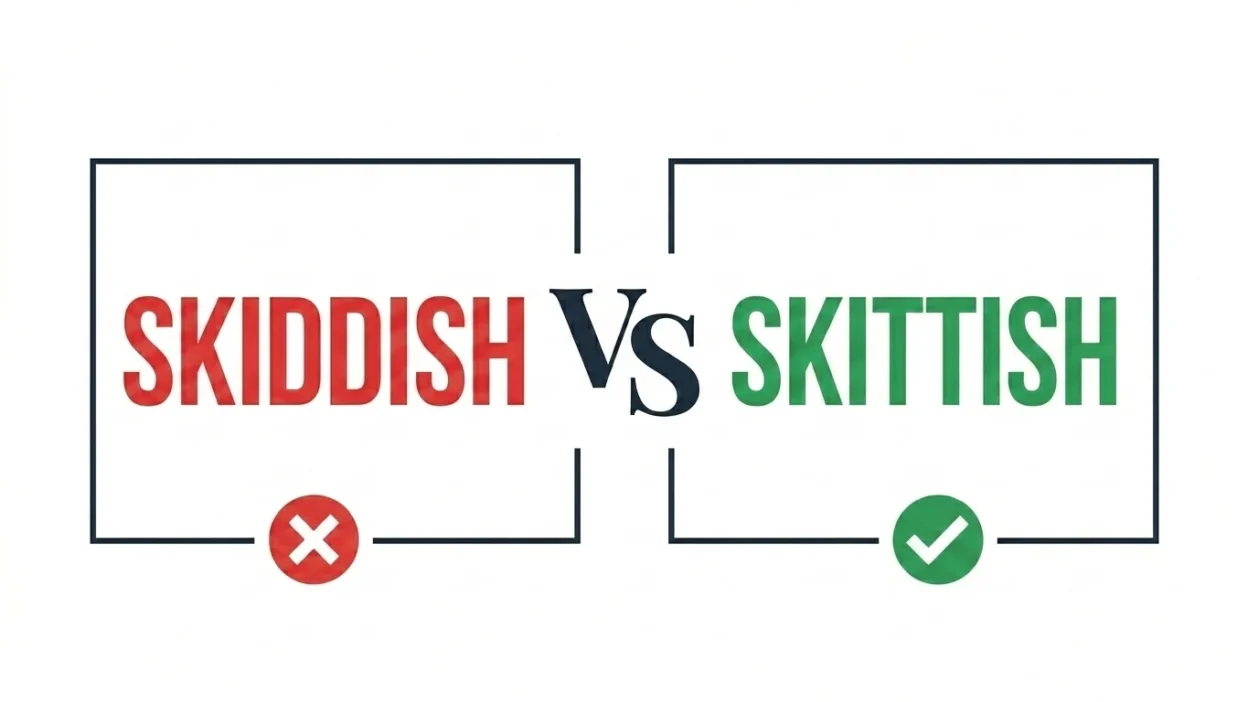
Skittish is the correct English word.
Skiddish is generally considered a misspelling or phonetic spelling of skittish and does not appear as a standard dictionary entry in modern English.
✅ Correct: The horse became skittish during the storm.
❌ Incorrect: The horse became skiddish during the storm.
What Does Skittish Mean?
The word skittish is an adjective used to describe someone or something that is nervous, easily frightened, jumpy, restless, or reluctant to commit.
It is commonly used when talking about:
- Horses
- Animals
- Nervous people
- Investors
- Shoppers
- Markets
Simple Definition
Skittish = easily scared, nervous, cautious, or unpredictable.
Examples
- The puppy was skittish around strangers.
- Investors became skittish after the economic report.
- She felt skittish about moving to a new city.
- The horse grew skittish when it heard thunder.
Is Skiddish a Real Word?
In standard English, skiddish is not considered a correct spelling.
Many people write skiddish because it sounds similar to skittish when spoken aloud. This is a classic example of a phonetic spelling mistake.
Why People Write “Skiddish”
Several factors contribute to the confusion:
- Regional accents
- Fast speech
- Mishearing the word
- Learning vocabulary through conversation instead of reading
- Social media and informal writing
Because the pronunciation of skittish can sound like skiddish in some accents, the incorrect spelling has become surprisingly common online.
Skiddish vs Skittish Comparison Table
| Feature | Skittish | Skiddish |
|---|---|---|
| Standard English word | ✅ Yes | ❌ No |
| Found in major dictionaries | ✅ Yes | ❌ Usually No |
| Correct spelling | ✅ Yes | ❌ No |
| Common online misspelling | ❌ No | ✅ Yes |
| Means nervous or easily frightened | ✅ Yes | Intended meaning only |
| Suitable for formal writing | ✅ Yes | ❌ No |
Origin of the Word Skittish
The word skittish has been part of English for centuries. Linguists trace it back to older forms associated with being lively, playful, restless, or unpredictable.
Over time, the meaning evolved to emphasize nervousness and easy fright.
Today, the word is frequently used in:
- Journalism
- Literature
- Everyday conversation
- Animal training
- Business and finance writing
How to Use Skittish Correctly
When Describing Animals
Animals often become skittish when exposed to unfamiliar situations.
Examples:
- The cat remained skittish after being adopted.
- Deer are naturally skittish around humans.
- The horse looked skittish before the race.
When Describing People
People can also be described as skittish when they seem nervous or hesitant.
Examples:
- He was skittish about making a large investment.
- The new employee seemed skittish during meetings.
- She became skittish after hearing the rumors.
When Discussing Business or Finance
Financial reporters frequently use the word.
Examples:
- Skittish investors sold their stocks.
- The announcement made markets skittish.
- Consumers became skittish about spending.
Common Mistakes With Skiddish vs Skittish
Mistake 1: Assuming Both Spellings Are Acceptable
Many people think both versions are correct.
Incorrect:
- The dog was skiddish.
Correct:
- The dog was skittish.
Mistake 2: Writing the Word Based on Sound
English spelling does not always match pronunciation. Because skittish can sound like skiddish in casual speech, writers often spell it incorrectly.
Mistake 3: Using the Misspelling in Professional Writing
Using skiddish in academic, professional, or business content can make your writing appear less polished. Always use skittish instead.
Synonyms of Skittish
Using related words can improve writing variety and readability.
Common synonyms include:
- Nervous
- Jumpy
- Uneasy
- Timid
- Fearful
- Restless
- Edgy
- Cautious
- Apprehensive
- Anxious
- Fidgety
- Shy
Example Sentences
- The nervous horse avoided the crowd.
- The anxious investor delayed making a decision.
- The timid puppy hid behind the couch.
- The cautious shopper waited for prices to drop.
Skittish in Everyday Conversation
Native English speakers frequently use skittish in casual speech.
Examples:
- I’m a little skittish about trying that roller coaster.
- My cat gets skittish around visitors.
- The market is feeling skittish this week.
- He’s skittish about signing the contract.
The word effectively communicates nervousness, uncertainty, or hesitation.
American vs British English
One helpful thing about this word is that there is no spelling difference between American and British English.
| English Variety | Correct Form |
|---|---|
| American English | Skittish |
| British English | Skittish |
| Canadian English | Skittish |
| Australian English | Skittish |
Across all major English-speaking regions, skittish remains the accepted spelling.
Memory Trick to Remember the Correct Spelling
A simple trick is to focus on the double “tt” in skittish.
Think:
“A nervous person may stutter, and stutter has double letters—just like skittish.”
Another reminder:
- Skittish = Correct
- Skiddish = Misspelling
Examples of Correct and Incorrect Usage
Correct Usage
✅ The horse became skittish during the parade.
✅ Investors remained skittish after the announcement.
✅ The rescue dog was initially skittish around people.
✅ She felt skittish about changing careers.
Incorrect Usage
❌ The horse became skiddish during the parade.
❌ Investors were skiddish after the announcement.
❌ The rescue dog looked skiddish.
❌ He seemed skiddish about the decision.
Why This Mistake Is So Common
The confusion between skiddish vs skittish happens because English is often learned through listening before reading.
People hear the word in conversation and naturally spell it the way it sounds. Since skittish may be pronounced quickly or with regional accents, many assume the spelling should be skiddish.
The rise of social media, texting, and informal communication has also helped spread the misspelling, even though dictionaries and style guides consistently recognize only skittish.
Frequently Asked Questions
Is skiddish a real word?
No. It is generally considered a misspelling of skittish and is not accepted in standard English.
Which spelling is correct: skiddish or skittish?
Skittish is the correct spelling.
What does skittish mean?
It means nervous, jumpy, easily frightened, cautious, or hesitant.
Can skittish describe people?
Yes. It can describe people who are uneasy, nervous, or reluctant.
Is skittish commonly used for animals?
Yes. It is especially common when describing horses, dogs, cats, and other easily startled animals.
Is skittish used in business writing?
Yes. Financial writers often describe investors or markets as skittish during periods of uncertainty.
Do Americans and British people spell it differently?
No. Both American and British English use skittish.
Why is skiddish so common online?
Because many people spell the word according to how it sounds when spoken rather than how it is officially spelled.
Summary
When comparing skiddish vs skittish, the answer is straightforward: skittish is the correct spelling, while skiddish is a common misspelling. The word skittish describes someone or something that is nervous, jumpy, easily frightened, cautious, or hesitant. It is widely used in everyday conversation, literature, journalism, and business writing.
Understanding this distinction can help you write with greater confidence and accuracy. Since both American and British English use the spelling skittish, you can safely use it in any form of English writing without concern.
Actionable Takeaway
If you’re ever unsure, remember this simple rule: Skittish is the real word; skiddish is the mistake. Before publishing, emailing, or submitting your writing, do a quick spell check and replace any instance of skiddish with skittish.

Joy Root is a content writer at Whygenix.com, creating clear, engaging articles that explain complex ideas simply, helping readers understand why topics matter in everyday life and personal growth.