Have you ever typed “spicey” while describing your favorite hot wings or spicy curry and wondered if it was actually correct? You’re not alone. The confusion between spicey vs spicy is surprisingly common because the word comes from spice, leading many people to assume that the adjective should keep the letter “e.”
English spelling, however, doesn’t always work the way we expect. If you’re trying to figure out whether spicey or spicy is the correct spelling, you’ve come to the right place. This comprehensive guide explains the difference, provides examples, highlights common mistakes, and offers simple memory tricks so you’ll never get confused again.
Quick Answer
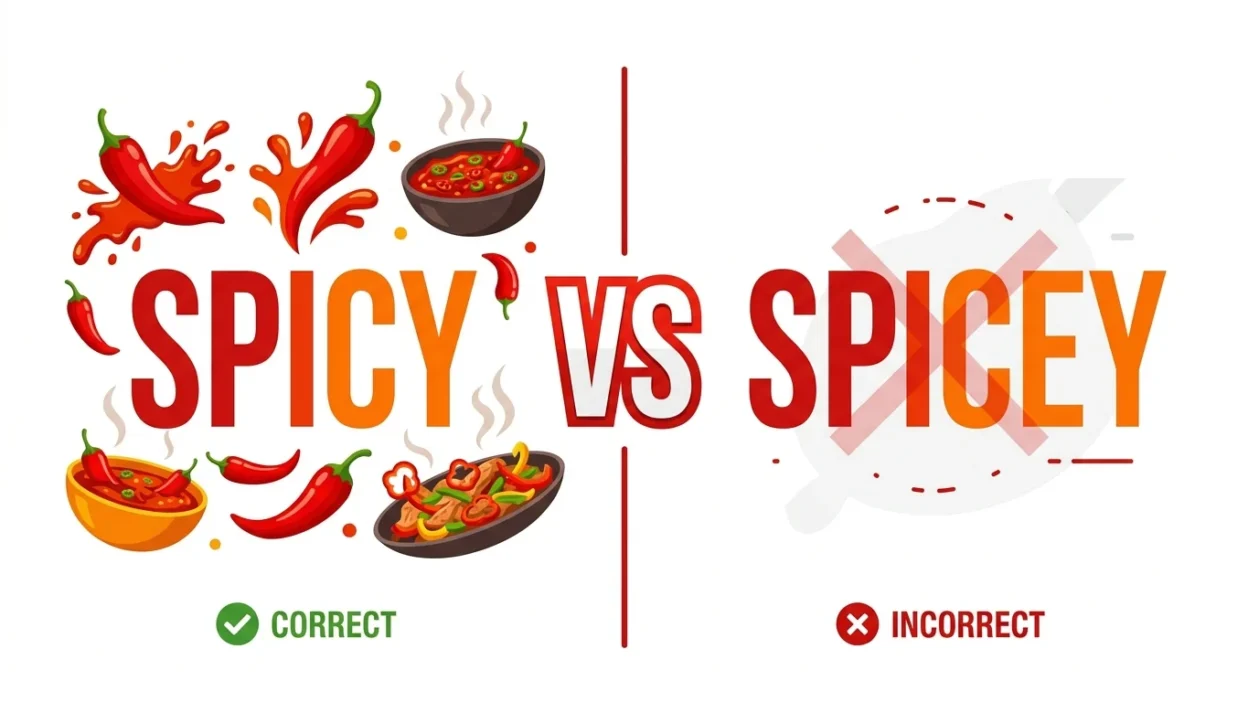
✅ Spicy is the correct spelling.
❌ Spicey is considered a misspelling in standard English.
Correct Examples
- I love spicy Mexican food.
- This sauce is extremely spicy.
- She ordered a spicy chicken sandwich.
Incorrect Examples
- I love spicey Mexican food.
- This sauce is very spicey.
Whether you’re writing professionally, academically, or casually, always use spicy.
Spicey vs Spicy Comparison Table
| Word | Correct? | Meaning | Usage |
|---|---|---|---|
| Spicy | ✅ Yes | Having a strong, hot, flavorful taste | Standard English |
| Spicey | ❌ No | No accepted standard meaning | Misspelling of spicy |
The verdict is simple: spicy is correct, while spicey should be avoided.
What Does Spicy Mean?
Spicy is an adjective used to describe food that contains strong seasonings, hot peppers, or flavorful spices.
However, the word isn’t limited to food. It can also describe situations, stories, conversations, or personalities that are exciting, bold, or provocative.
Definition of Spicy
Spicy: Having the flavor, aroma, or heat of spices; exciting or stimulating.
Examples of Spicy
- The curry was incredibly spicy.
- I enjoy spicy tacos.
- The debate became quite spicy.
- She has a spicy sense of humor.
The word is commonly associated with heat, flavor, excitement, and intensity.
Why Do People Write “Spicey”?
The confusion comes from the root word spice.
Many people assume:
- Spice + y = Spicey
But English spelling rules often require removing the final silent “e” before adding the suffix “-y.”
Similar Examples
| Base Word | Correct Adjective |
|---|---|
| Spice | Spicy |
| Ice | Icy |
| Noise | Noisy |
| Slime | Slimy |
| Shine | Shiny |
Notice the pattern:
The final silent “e” disappears.
That’s why spicy is correct, not spicey.
The Origin of the Word Spicy
The word spicy comes from spice, which refers to aromatic substances used to flavor food.
Over time, English speakers created the adjective spicy to describe foods rich in spices or heat.
Examples include:
- Spicy curry
- Spicy salsa
- Spicy noodles
- Spicy chili
The accepted spelling has always been spicy.
Different Meanings of Spicy
Many people think spicy only refers to food, but it has several meanings.
1. Hot and Flavorful Food
This is the most common meaning.
Examples:
- Spicy chicken
- Spicy noodles
- Spicy soup
2. Exciting or Interesting
Sometimes spicy means exciting or entertaining.
Examples:
- A spicy news story
- A spicy plot twist
- A spicy discussion
3. Bold Personality
The word can describe someone energetic, confident, or outspoken.
Examples:
- She has a spicy personality.
- His comments were a bit spicy.
Examples of Spicy in Sentences
Food Examples
- The salsa was too spicy for me.
- He ordered the most spicy dish on the menu.
- Thai food can be wonderfully spicy.
Everyday Examples
- Their conversation became surprisingly spicy.
- The article contained some spicy details.
- She enjoys reading spicy mystery novels.
Travel and Culture
- Many cultures are famous for their spicy cuisine.
- The restaurant specializes in spicy dishes from around the world.
Common Mistakes with Spicey vs Spicy
Mistake 1: Keeping the Silent “E”
❌ Spicey
✅ Spicy
This is the most frequent spelling error.
Mistake 2: Following the Root Word Too Closely
People often assume:
- Spice → Spicey
However, English grammar removes the silent “e.”
Mistake 3: Trusting Informal Online Usage
You may see spicey on social media, blogs, or comments.
That doesn’t make it correct.
Professional writing should always use spicy.
Mistake 4: Ignoring Dictionary Standards
Major dictionaries consistently list spicy as the accepted spelling.
Spicy in Food Culture
The word spicy is especially important in food writing and culinary discussions.
Popular Spicy Foods
- Curry
- Salsa
- Kimchi
- Buffalo wings
- Jalapeño poppers
- Chili con carne
- Hot sauce
- Tacos
Benefits of Spicy Foods
Many people enjoy spicy foods because they:
- Add flavor
- Create excitement
- Stimulate the senses
- Enhance meals
Of course, spice tolerance varies from person to person.
Synonyms for Spicy
Using synonyms can make your writing richer and more engaging.
Food-Related Synonyms
- Hot
- Peppery
- Zesty
- Piquant
- Flavorful
- Seasoned
Figurative Synonyms
- Exciting
- Bold
- Lively
- Provocative
- Entertaining
- Stimulating
Example
Instead of:
- The meal was spicy.
You could write:
- The meal was zesty.
- The meal was peppery.
- The meal was flavorful.
Related LSI Keywords
To better understand the topic and improve SEO relevance, consider these related terms:
- spicy meaning
- spicy definition
- spicy food
- hot food
- flavorful dishes
- spicey vs spicy
- spicy spelling
- spicy cuisine
- spicy recipes
- spicy chicken
- spicy curry
- spicy flavors
- correct spelling of spicy
These keywords are commonly associated with searches about the word spicy.
American vs British English
Unlike some words that differ between American and British spelling, there is no difference here.
American English
✅ Spicy
❌ Spicey
British English
✅ Spicy
❌ Spicey
Both varieties of English use exactly the same spelling.
No matter where you are writing, spicy is the correct choice.
Easy Memory Trick
Need a simple way to remember?
Think about similar words:
- Spice → Spicy
- Ice → Icy
- Noise → Noisy
- Shine → Shiny
The final silent “e” disappears before adding “y.”
Quick Formula
Spice − e + y = Spicy
Not:
Spice + y = Spicey
This simple rule works every time.
Why Correct Spelling Matters
Using the correct spelling improves:
- Professional communication
- Food blogs
- Restaurant menus
- Academic writing
- Social media content
- Reader confidence
Misspellings can distract readers and reduce credibility.
Using spicy correctly makes your writing look polished and trustworthy.
Frequently Asked Questions
1. Is spicy or spicey correct?
Spicy is correct. Spicey is a misspelling.
2. Is spicey a real English word?
No. Standard dictionaries recognize spicy, not spicey.
3. Why do people write spicey?
People often keep the final “e” from the root word spice, even though English spelling rules remove it.
4. How do you spell spicy correctly?
The correct spelling is:
S-P-I-C-Y
5. Is spicy used in British English?
Yes. Both British and American English use spicy.
6. Can spicy describe something other than food?
Yes. It can describe exciting stories, lively personalities, or bold conversations.
7. What are synonyms for spicy?
Common synonyms include hot, zesty, peppery, flavorful, piquant, and bold.
8. Why is spicy spelled without the “e”?
English spelling rules typically remove the final silent “e” before adding the suffix “-y.”
Conclusion
When comparing spicey vs spicy, the correct spelling is always spicy. The word describes foods rich in flavor and heat, but it can also refer to exciting situations, bold personalities, and lively conversations. Although spicey may seem logical because it comes from the word spice, standard English spelling rules require dropping the final silent “e.”
Whether you’re writing about spicy food, spicy recipes, spicy cultures, or spicy discussions, choosing the correct spelling improves clarity and professionalism. Both American and British English agree that spicy is the accepted form.
Actionable Takeaway
Whenever you’re unsure, remember this simple rule:
Spice − E + Y = Spicy
If you’re describing something hot, flavorful, exciting, or bold, always use spicy. Keeping this spelling rule in mind will help you avoid the common spicey vs spicy mistake every time.

Joy Root is a content writer at Whygenix.com, creating clear, engaging articles that explain complex ideas simply, helping readers understand why topics matter in everyday life and personal growth.