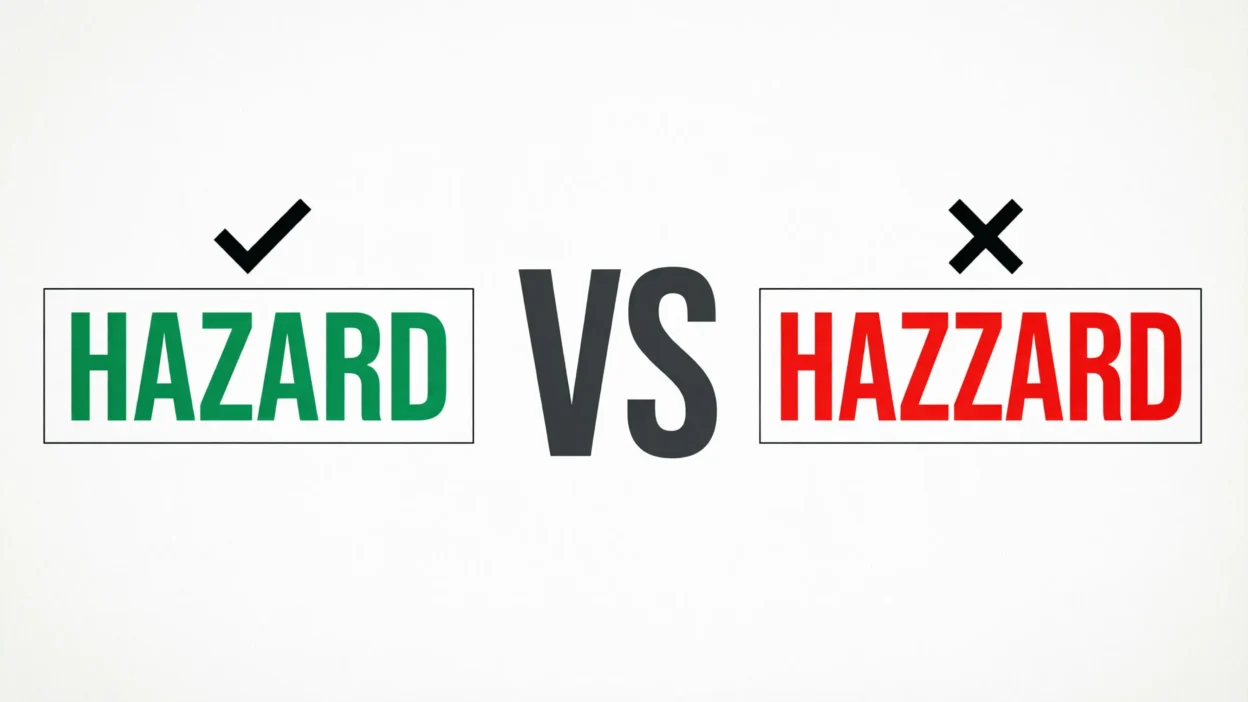
Have you ever typed “hazzard” and wondered whether it was the correct spelling? You’re not alone. Many English learners and native speakers alike get confused between hazard vs hazzard, especially because the word sounds like it could have a double “z.”
The good news is that the confusion is easy to clear up. In standard English, hazard is the correct spelling, while hazzard is generally considered a misspelling unless it appears as part of a person’s name or a proper noun. This guide explains the difference, provides examples, and helps you avoid common spelling mistakes.
Quick Answer
✅ Hazard = Correct spelling
❌ Hazzard = Incorrect spelling in standard English (except in names)
Example:
- Correct: The workers wore helmets to protect themselves from workplace hazards.
- Incorrect: The workers wore helmets to protect themselves from workplace hazzards.
If you’re referring to danger, risk, or something that may cause harm, always use hazard.
What Does “Hazard” Mean?
The word hazard refers to a danger, risk, threat, or source of potential harm. It can be used as both a noun and a verb.
Hazard as a Noun
As a noun, hazard means something that could cause injury, damage, or loss.
Examples:
- Wet floors are a safety hazard.
- Smoking is a health hazard.
- Driving during a storm can be a serious hazard.
Hazard as a Verb
As a verb, hazard means to take a risk or make a guess.
Examples:
- I would hazard a guess that the meeting will end soon.
- She hazarded an opinion during the discussion.
What Does “Hazzard” Mean?
In standard dictionaries, hazzard is not recognized as the correct spelling of the word meaning danger or risk.
However, Hazzard may appear as:
- A surname
- A family name
- Part of a business name
- A fictional character’s name
For example, someone could be named John Hazzard, where the spelling is part of their proper name.
Outside of names, using hazzard instead of hazard is considered a spelling error.
Hazard vs Hazzard: Side-by-Side Comparison
| Feature | Hazard | Hazzard |
|---|---|---|
| Correct English spelling | ✅ Yes | ❌ No |
| Means danger or risk | ✅ Yes | ❌ No |
| Found in dictionaries | ✅ Yes | ❌ Usually not |
| Commonly used in writing | ✅ Yes | ❌ No |
| May appear as a surname | Rarely | ✅ Yes |
Why Do People Misspell Hazard as Hazzard?
Several factors contribute to this common spelling confusion.
1. Pronunciation Similarity
When spoken quickly, some people hear the word as if it contains two “z” letters.
2. Influence of Other English Words
English contains many words with double consonants, such as:
- Puzzle
- Fuzzy
- Buzzard
- Dazzle
Because of these patterns, writers may mistakenly assume hazard should also contain a double “z.”
3. Typing Errors
Fast typing often results in accidental letter duplication.
4. Name Recognition
Some people have encountered the surname Hazzard, leading them to believe it is the standard spelling.
Correct Examples of Hazard in Sentences
Here are examples showing proper usage.
Workplace Safety
- Chemical spills create a serious hazard for employees.
- Construction sites contain many potential hazards.
Health and Medicine
- Air pollution is a significant health hazard.
- Excessive sun exposure can become a skin cancer hazard.
Travel and Transportation
- Black ice is a driving hazard during winter.
- Poor visibility creates a road hazard.
Everyday Situations
- Leaving toys on the stairs is a tripping hazard.
- Broken glass poses a safety hazard.
Common Mistakes to Avoid
Many writers make these errors when using the word.
Mistake #1: Adding an Extra “Z”
❌ Hazzard
✅ Hazard
Mistake #2: Trusting Spellings Seen Online
Not every word you see online is correct. Always verify spellings using trusted dictionaries and style guides.
Mistake #3: Confusing Names with Standard Words
A surname like Hazzard does not change the standard spelling of hazard.
Easy Memory Trick
A simple way to remember the correct spelling is:
Hazard has one Z because one hazard is enough trouble already.
Think of:
- Hazard = danger
- One danger = one Z
This small memory trick can help prevent future spelling mistakes.
Synonyms of Hazard
If you want variety in your writing, consider these alternatives:
- Danger
- Risk
- Threat
- Peril
- Menace
- Jeopardy
- Unsafe condition
- Safety concern
- Source of harm
Example
Instead of:
- The icy road was a hazard.
You could write:
- The icy road was a danger.
- The icy road posed a significant risk.
Hazard in Different Contexts
Safety Hazard
A condition that could cause injury or accidents.
Example: Loose electrical wires are a safety hazard.
Environmental Hazard
Something harmful to the environment.
Example: Oil spills create environmental hazards.
Health Hazard
Anything that threatens human health.
Example: Toxic chemicals are health hazards.
Fire Hazard
A condition that increases the risk of fire.
Example: Dry leaves near a campfire can become a fire hazard.
American vs British English
One advantage of this word is that there is no spelling difference between American and British English.
| Variant | Correct Spelling |
|---|---|
| American English | Hazard |
| British English | Hazard |
| Canadian English | Hazard |
| Australian English | Hazard |
Across all major English varieties, hazard remains the accepted spelling.
Related Words
Understanding related forms can strengthen your vocabulary.
| Word | Meaning |
|---|---|
| Hazard | Danger or risk |
| Hazards | Multiple dangers |
| Hazardous | Dangerous |
| Hazardously | In a dangerous way |
| Hazardousness | State of being dangerous |
Examples
- The material is hazardous.
- Chemicals were stored hazardously.
- Workers identified several hazards.
When Is Hazzard Acceptable?
The spelling Hazzard is acceptable only when it is part of:
- A person’s name
- A company name
- A fictional character
- A place name
Example
✅ Sarah Hazzard wrote the report.
❌ Sarah identified several workplace hazzards.
The second sentence should use hazards instead.
Frequently Asked Questions (FAQs)
Is hazard or hazzard correct?
Hazard is the correct spelling when referring to danger, risk, or a potential source of harm.
Why do people spell hazard as hazzard?
People often add an extra “z” because of pronunciation, typing mistakes, or confusion with surnames like Hazzard.
Is hazzard a real word?
Not as a standard English word meaning danger. It may exist as a surname or proper noun.
Is hazard spelled differently in British English?
No. Both British and American English use hazard.
What is a hazard in safety terms?
A hazard is anything that can potentially cause injury, illness, property damage, or environmental harm.
What is the adjective form of hazard?
The adjective form is hazardous.
Can hazard be used as a verb?
Yes. It can mean to take a risk or make a guess.
What is another word for hazard?
Common alternatives include danger, threat, risk, peril, and menace.
Final Summary
The debate over hazard vs hazzard has a simple answer: hazard is the correct spelling in standard English. It refers to a danger, risk, threat, or condition that may cause harm. The spelling hazzard is generally incorrect unless it appears as part of a person’s name or another proper noun.
Whether you’re writing about workplace safety, environmental risks, health concerns, or everyday dangers, always choose hazard. Remember the simple rule: one hazard, one Z. Keeping this spelling in mind will make your writing more accurate, professional, and trustworthy.
Actionable Takeaway
Before publishing emails, reports, articles, or school assignments, quickly check that you’ve written hazard with a single z. Adding this word to your spelling awareness list can help you avoid a common English mistake and improve your overall writing accuracy.

Joy Root is a content writer at Whygenix.com, creating clear, engaging articles that explain complex ideas simply, helping readers understand why topics matter in everyday life and personal growth.