Have you ever typed “agast” and wondered whether it should actually be “aghast”? You’re not alone. Many English learners and native speakers alike get confused by these two spellings because they look similar and sound somewhat alike.
The good news is that the confusion is easy to clear up. In modern English, “aghast” is a recognized word with a specific meaning, while “agast” is generally considered a misspelling or an obsolete historical variant. Understanding the difference can help you write more accurately and avoid common grammar mistakes.
Quick Answer
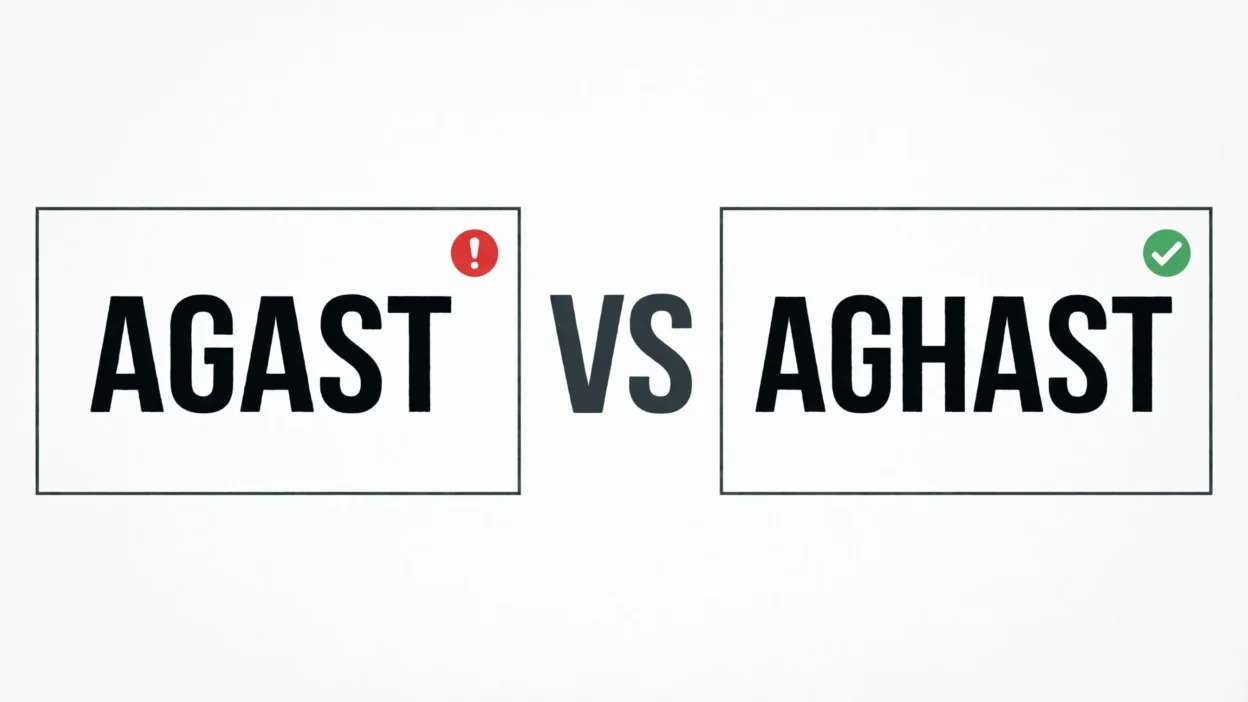
Aghast is the correct modern English word. It means shocked, horrified, amazed, or filled with disbelief.
Agast is usually a misspelling of aghast and should generally be avoided in modern writing.
Correct: I was aghast when I saw the damage.
Incorrect: I was agast when I saw the damage.
What Does Aghast Mean?
The word aghast is an adjective used to describe a strong feeling of shock, horror, surprise, or disbelief.
When someone is aghast, they are often so surprised or disturbed that they momentarily don’t know how to react.
Definition
Aghast (adjective):
Feeling shocked, horrified, appalled, or greatly surprised.
Synonyms of Aghast
- Shocked
- Horrified
- Appalled
- Stunned
- Astonished
- Dismayed
- Alarmed
- Speechless
- Startled
- Dumbfounded
Example Sentences
- She was aghast when she discovered the truth.
- The audience looked aghast after hearing the announcement.
- We were aghast at the amount of waste being produced.
- His parents were aghast at his behavior.
- I stood aghast, unable to believe what I had witnessed.
What Does Agast Mean?
In modern English, agast is generally not considered the standard spelling.
Historically, agast appeared in older forms of English literature and was sometimes used as a variant spelling of aghast. However, contemporary dictionaries and style guides overwhelmingly prefer aghast.
As a result, if you write agast today, most readers and editors will assume it is a spelling mistake.
Historical Usage
In older English texts, you might occasionally find:
- Agast
- Agasted
- Agaste
These forms were used centuries ago before spelling became standardized.
Today, however, aghast is the accepted spelling.
Agast vs Aghast: Side-by-Side Comparison
| Feature | Agast | Aghast |
|---|---|---|
| Modern English usage | Rare/obsolete | Standard |
| Dictionary acceptance | Limited historical use | Fully accepted |
| Meaning | Historical variant of aghast | Shocked, horrified, astonished |
| Recommended in writing | No | Yes |
| Common in professional writing | No | Yes |
Why Do People Confuse Agast and Aghast?
There are several reasons why writers mix up these words.
1. Similar Pronunciation
Many people hear the word spoken and assume it is spelled agast because the silent “h” is not strongly pronounced.
2. Typing Errors
When typing quickly, the letter “h” is often omitted accidentally.
3. Older Literature
Some readers encounter historical texts containing the spelling agast, which can create confusion about which version is correct.
4. Lack of Familiarity
Since aghast is not an everyday word for many people, its spelling can feel unusual.
Examples of Correct Usage of Aghast
Here are some examples showing how aghast works in everyday English.
In Conversation
- I was aghast when I heard the news.
- She looked absolutely aghast after opening the email.
- The teacher seemed aghast by the students’ behavior.
In Professional Writing
- Investors were aghast at the sudden market collapse.
- Residents were aghast by the scale of the disaster.
- Officials expressed aghast reactions to the findings.
In Storytelling
- He stared at the scene, utterly aghast.
- The villagers stood aghast as the storm approached.
- Sarah was aghast when the secret was revealed.
Common Mistakes to Avoid
Mistake #1: Using Agast in Formal Writing
❌ The manager was agast by the report.
✅ The manager was aghast by the report.
Mistake #2: Assuming Both Spellings Are Equally Correct
❌ Agast and aghast are both common modern spellings.
✅ Aghast is the accepted modern spelling.
Mistake #3: Confusing Aghast with Angry
Being aghast does not necessarily mean being angry.
For example:
- You can be aghast by shocking news.
- You can be aghast by an unexpected surprise.
- You can be aghast without feeling anger.
Memory Trick to Remember Aghast
A simple way to remember the correct spelling is:
Aghast = “Agh!” + Shocked
Imagine someone seeing something unbelievable and shouting:
“Agh!”
That sound can remind you that the correct word contains an “h.”
Is There an American vs British English Difference?
No.
Unlike many words that differ between American and British English, aghast is spelled the same in both varieties.
American English
- I was aghast at the mistake.
British English
- I was aghast at the mistake.
Both forms use aghast, not agast.
When Should You Use Aghast?
Use aghast whenever you want to describe:
- Shock
- Horror
- Amazement
- Disbelief
- Deep surprise
- Emotional astonishment
Examples
- The community was aghast after the incident.
- Everyone was aghast by the sudden announcement.
- I was aghast to learn how much money had been lost.
Related Words and Phrases
If you’re looking for alternatives to aghast, consider these related words:
| Word | Meaning |
|---|---|
| Appalled | Deeply shocked |
| Horrified | Filled with horror |
| Astonished | Extremely surprised |
| Stunned | Unable to react because of surprise |
| Dismayed | Concerned and disappointed |
| Shocked | Emotionally surprised |
| Dumbfounded | Speechless from surprise |
| Startled | Suddenly surprised |
These synonyms can add variety to your writing while expressing a similar feeling.
How Aghast Is Used in Modern English
The word aghast often appears in:
- News articles
- Books and novels
- Academic writing
- Business reports
- Personal narratives
- Journalistic content
Although it is somewhat formal, it remains widely understood and frequently used by educated speakers and writers.
Frequently Asked Questions (FAQs)
1. Is agast a real word?
Historically, yes. However, in modern English it is generally treated as an obsolete spelling or a misspelling of aghast.
2. Which is correct: agast or aghast?
Aghast is the correct modern spelling and should be used in almost all writing situations.
3. What does aghast mean?
It means feeling shocked, horrified, stunned, or deeply surprised.
4. Is aghast formal or informal?
It is slightly formal but still common in everyday English and professional writing.
5. Can I use agast in academic writing?
No. Academic, business, and professional writing should use aghast.
6. How do you pronounce aghast?
It is commonly pronounced as:
uh-GAST
The second syllable receives the stress.
7. Is aghast positive or negative?
Usually negative because it often describes shock, horror, or dismay, although it can occasionally refer to extreme surprise.
8. What is a synonym for aghast?
Common synonyms include appalled, horrified, stunned, astonished, and dumbfounded.
Conclusion
The debate over agast vs aghast is actually quite simple once you understand the history. While agast appeared in older forms of English, it is no longer the standard spelling in modern usage. Most readers, editors, and dictionaries recognize aghast as the correct word.
Whenever you want to describe someone who is shocked, horrified, stunned, or deeply surprised, choose aghast. Using the accepted spelling will make your writing look more professional, polished, and grammatically accurate.
Actionable Takeaway
If you’re ever unsure, remember this rule:
Aghast = Correct modern spelling
Agast = Obsolete or misspelled form
Before publishing or submitting your writing, do a quick search for agast and replace it with aghast unless you’re intentionally quoting historical text.

Bret Lee writes educational and research-based content for Whygenix.com, focused on clarity, accuracy, and explaining why concepts matter through simple, engaging, reader-friendly writing.